Posted by Spycor Building on Mar 5th 2026
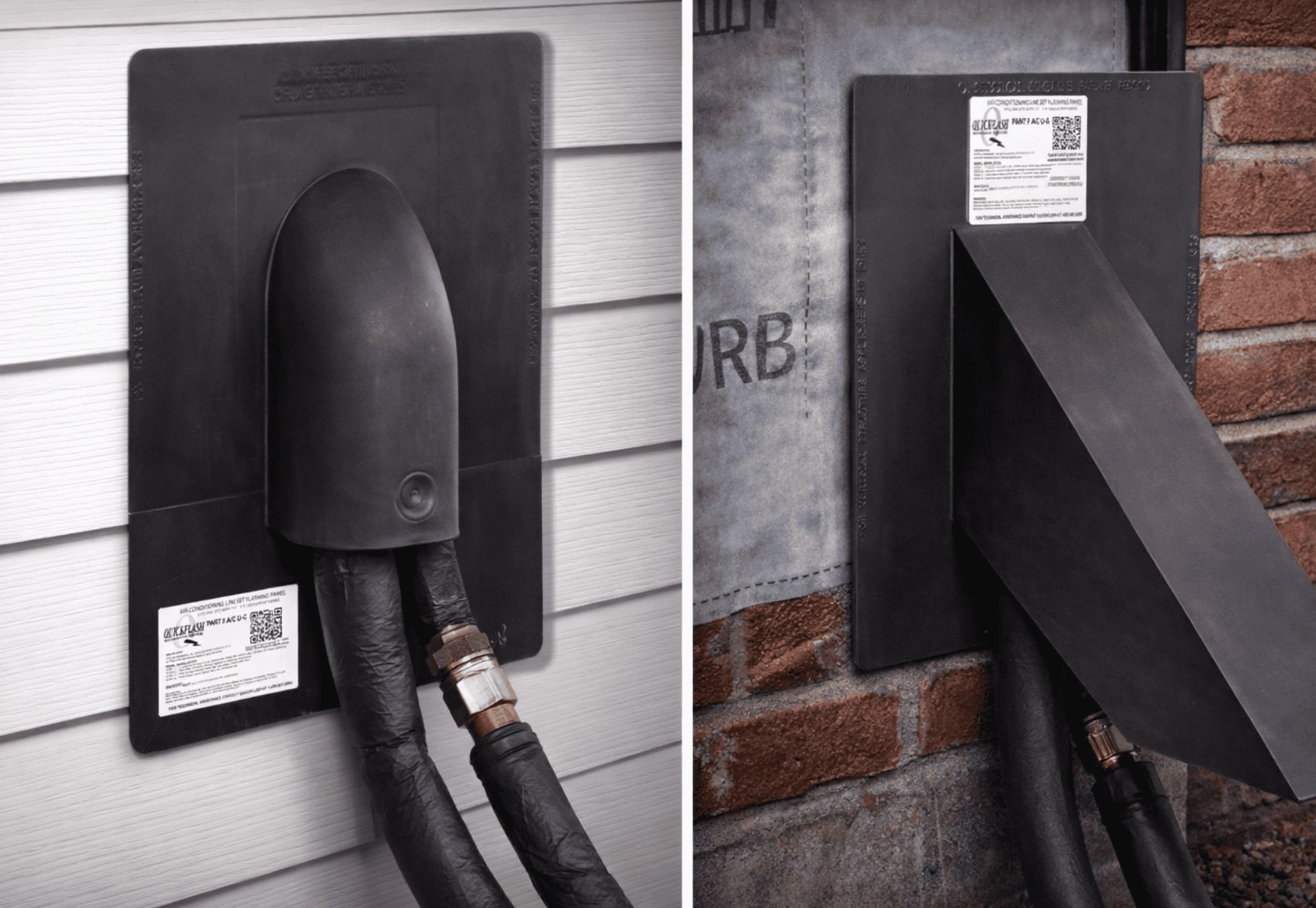
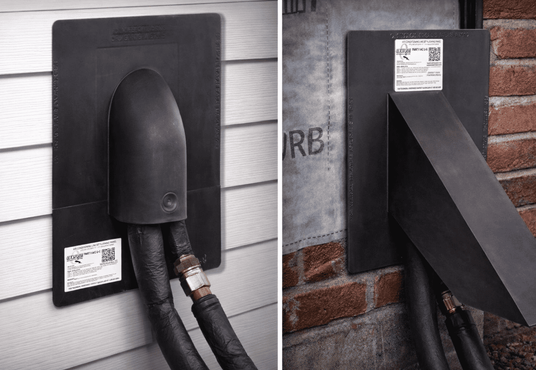
For professional HVAC technicians and mechanical contracting firms, the penetration point—where refrigerant lines and electrical conduits enter a structure—is a critical vulnerability.
Traditional "caulk and walk" methods are a primary source of unnecessary callbacks and long-term liability. As building standards like IECC and LEED evolve, high-performance HVAC flashing panels have become the professional standard for ensuring a watertight, airtight seal.
Why Professional Contractors are Moving Away from Sealants
Using caulk or tape for line set penetrations is a short-term fix for a long-term structure. From a business and building science perspective, these traditional materials are fundamentally mismatched for the job and eventually fail due to the following factors:
-
Mechanical Stress: HVAC line sets are subject to constant vibration from compressor cycling and significant thermal expansion and contraction as refrigerant temperatures fluctuate. This persistent physical movement eventually shears the bond of even the highest-grade elastomeric caulks, creating microscopic channels for air and moisture.
-
Environmental Degradation: Exterior wall penetrations are subjected to relentless UV radiation, driving rain, and extreme freeze-thaw cycles. Over time, these conditions cause chemical sealants to lose their elasticity and adhesion to the substrate, leading to brittle cracking and separation that leaves the building envelope exposed.
-
The Cost of Failure: A single callback to address a water-related leak or a failed building inspection costs a firm significantly more in technician labor, fuel, and scheduling overhead than the initial investment in an engineered flashing solution. Beyond the direct costs, these failures erode the trust of general contractors and homeowners, potentially costing you future referrals and long-term contracts.
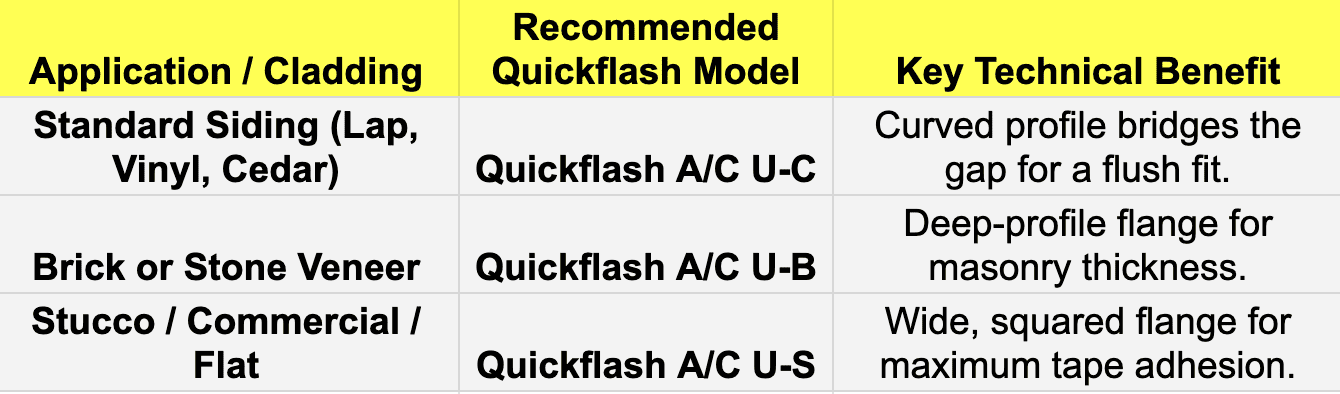
Contractor Selection Guide: Match the Substrate to the Panel
Use this quick-reference table to select the specific A/C Line Set Flashing Panel based on the exterior cladding of your project.
Technical Breakdown by Application
1. For Standard Siding: Quickflash A/C U-C (Universal Curved)
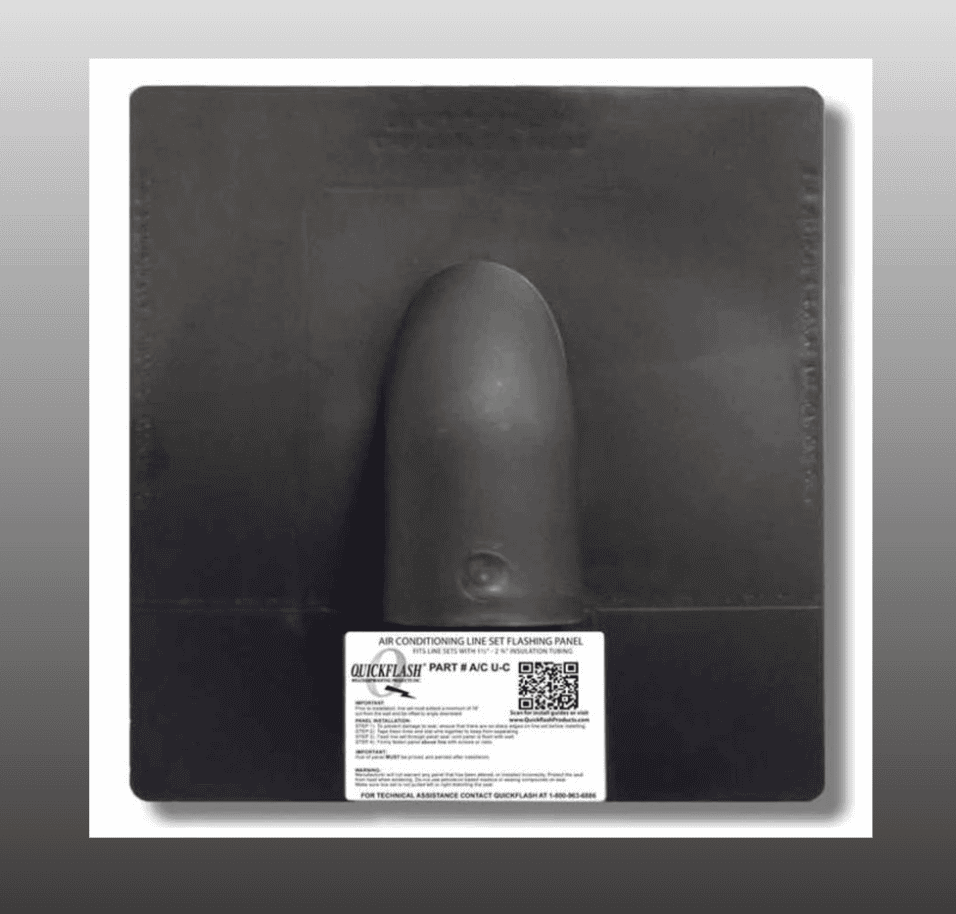
The Quickflash A/C U-C is engineered specifically for residential and light commercial lap siding. It integrates directly with the Weather-Resistive Barrier (WRB) to create a mechanical seal that caulk cannot match.
- Fitment: Fits line sets with 1.5" to 2.75" insulation tubing.
- Efficiency: Eliminates bulky, inconsistent beads of sealant, offering a uniform look that distinguishes professional work from a DIY install.
2. For Masonry: Quickflash A/C U-B (Brick and Stone)
Because masonry and stone veneers have significant depth and irregular textures, a standard flat panel won't suffice. The A/C U-B is the industry-leading brick and stone flashing panel for contractors.
- Protection: Engineered to bridge the air gap behind the veneer, ensuring the WRB remains continuous from the sheathing to the exterior finish.
- Aesthetics: Provides a clean, flush transition that respects the craftsmanship of premium masonry installations.
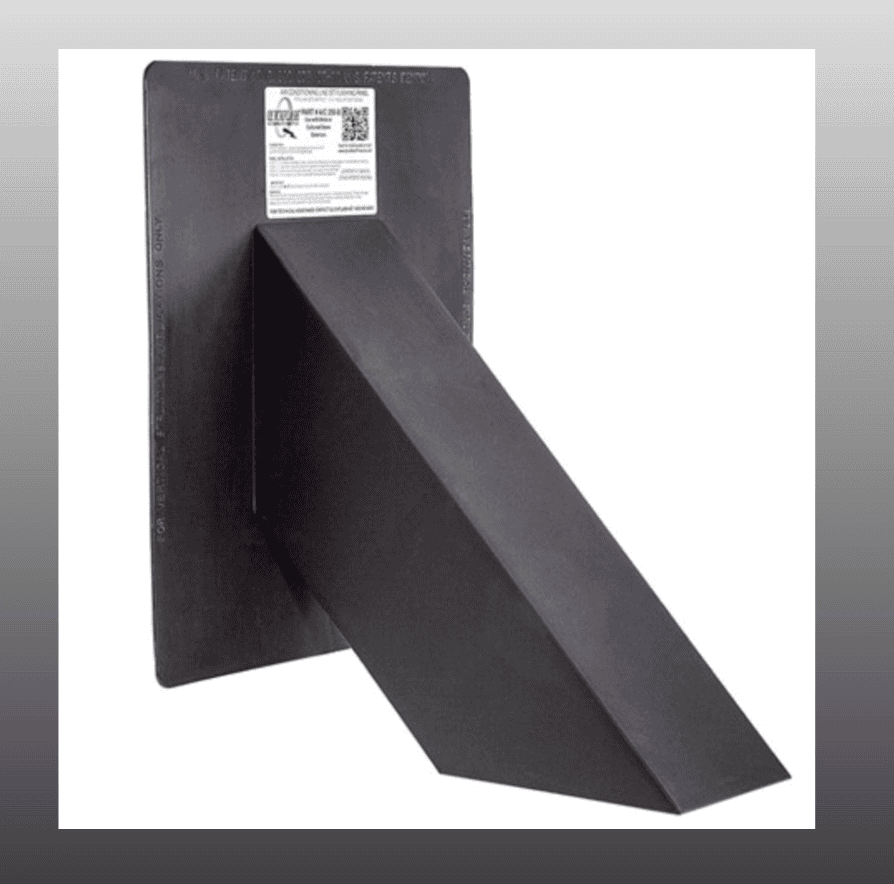
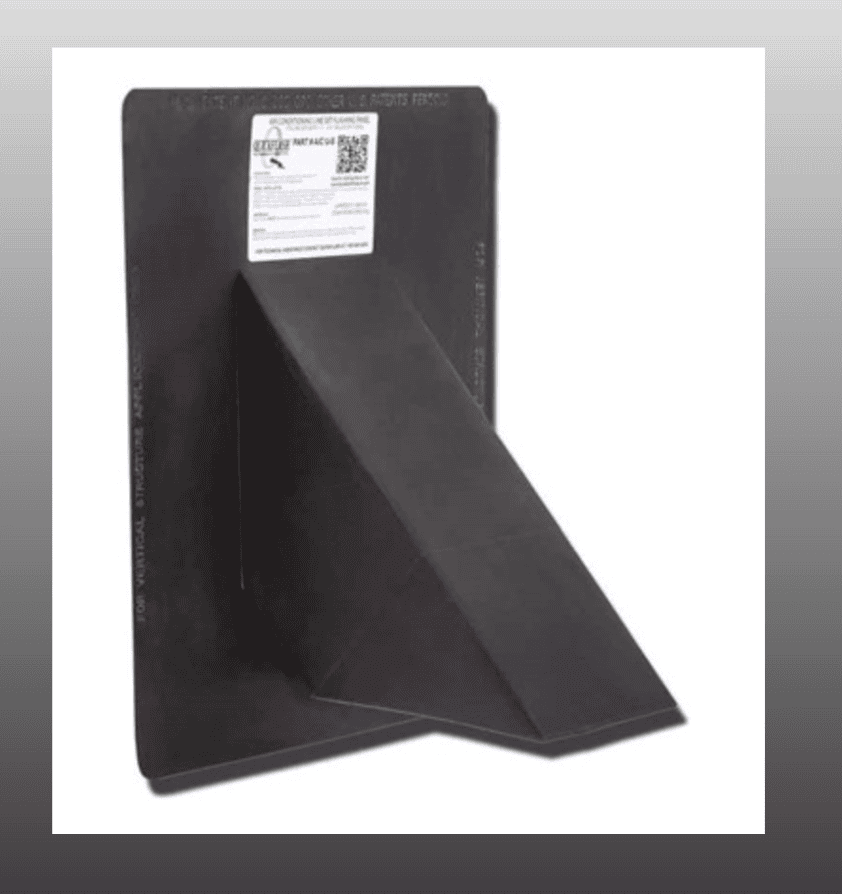
3. For Commercial & Flat Surfaces: Quickflash A/C U-S (Universal Squared)
The Universal Squared panel is the preferred choice for high-performance building envelopes where a flush-mount installation is required against flat siding, metal panels, or commercial sheathing.
- Stability: The wide, stable flange offers increased surface area for sealing tape, ensuring an airtight connection for blower-door tests.
- Versatility: Ideal for commercial projects where structural integrity and meeting strict energy codes are paramount.
Business Benefits for Contracting Firms
Standardizing your penetration sealing is a business strategy focused on long-term durability and operational efficiency. By utilizing engineered HVAC flashing, you move away from the "caulk and walk" culture and gain a competitive edge:
-
Save Time & Labor: Installation takes mere seconds, allowing your team to complete the building envelope portion of the job without waiting for sealants to cure or dry. By streamlining this workflow, you eliminate the need for secondary site visits and drastically reduce the labor hours typically wasted on repetitive, messy manual detailing.
-
Enhance Reputation: High-end custom builders and property management firms prioritize partners who provide professional, code-compliant, and durable results. By demonstrating a commitment to advanced building science, you differentiate your firm from competitors who rely on temporary "quick fixes," positioning yourself as a premium contractor worthy of larger-scale projects.
-
Reduce Liability: Proactively sealing penetrations with a mechanical system protects the building envelope from hidden moisture-related damage, structural wood rot, and expensive mold claims. This proactive approach safeguards your business from the catastrophic legal and financial consequences of water intrusion, ensuring that your installations remain as sound years later as they were on the day of completion.
Conclusion
The industry is moving toward high-performance, durable, and low-maintenance solutions. By replacing short-lived chemical sealants with engineered flashing panels, professional contractors can effectively manage the building envelope, reduce callback frequency, and ensure their HVAC installations stand the test of time.
Ready to standardize your penetration sealing process?
Explore our full catalog of professional HVAC flashing solutions at Spycor Building, categorized by application type to help you find the right fit for your next project.
Choose the right A/C Line Set Flashing Panel for your next project:
- [Shop Quickflash A/C U-C for Siding]
- [Shop Quickflash A/C U-B for Brick & Stone]
- [Shop Quickflash A/C U-S for Flat Surfaces]
Frequently Asked Questions (FAQ)
1. Why is caulk considered a "short-term" solution for HVAC penetrations?
Caulk is a surface-level sealant that degrades due to UV exposure, thermal cycling, and building movement. Over time, it loses adhesion to exterior cladding, creating entry points for water, pests, and air leakage.
2. Can I use these panels on existing installations?
Yes. Many of our flashing panels are designed for both new construction and retrofitting. They are engineered to be installed over existing lines to provide a lasting, watertight seal without needing to disconnect the refrigerant lines.
3. Which panel should I choose for brick or stone veneer?
For masonry, we recommend the
4. Do these panels help with energy efficiency?
Absolutely. Air leakage at pipe penetrations is a major contributor to energy loss in residential and commercial buildings. Providing an airtight seal around the line set helps maintain the thermal performance of the wall assembly.
5. Are these panels code-compliant?
Our Quickflash professional line is designed to support compliance with modern energy and building codes that require continuous air and moisture barriers. Always check your local building codes for specific requirements regarding flashing and weatherproofing penetrations.