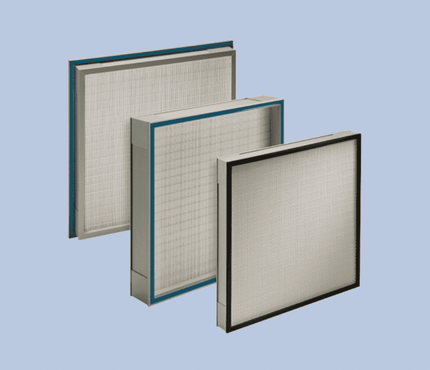
Posted by Spycor LLC on Mar 19th 2026
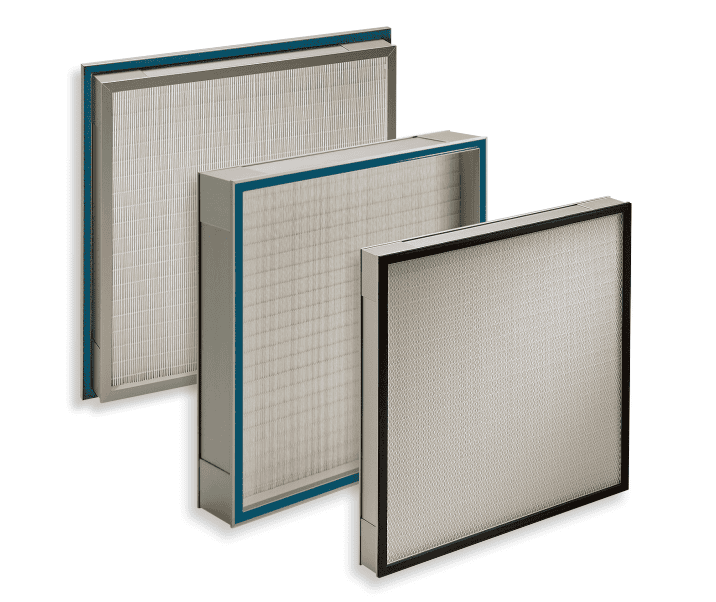
When a cleanroom fails a leak test or a hospital’s energy bill spikes, the culprit is usually the same: high-resistance air filtration and poor seal integrity.
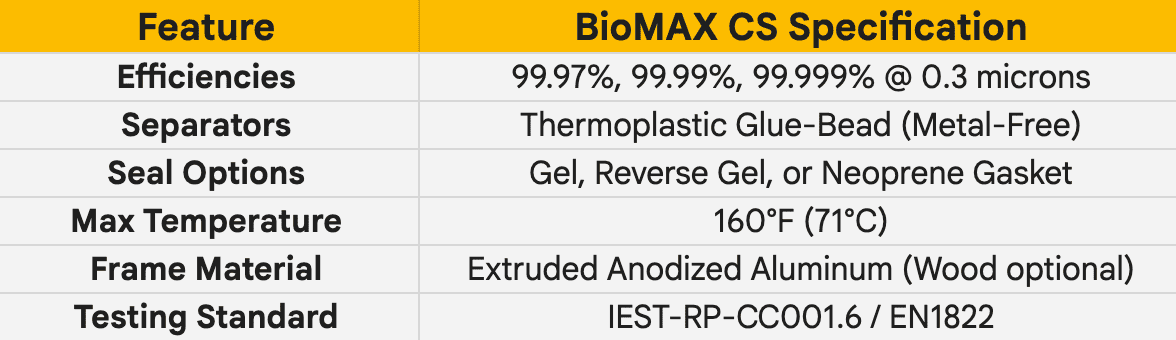
In sterile environments like surgical suites and ISO-rated labs, "standard" HEPA filters often force a trade-off between airflow efficiency and physical space. The Koch Filter BioMAX CS was engineered specifically to eliminate that compromise. By utilizing a high-density minipleat architecture, this filter delivers up to 99.999% efficiency while maintaining a significantly lower pressure drop than traditional deep-pleat alternatives.
If you are managing a facility where "zero air bypass" is a regulatory requirement, the BioMAX CS is the industry-standard choice for high-purity retrofits.
1. The Engineering: Why Minipleat Outperforms Deep-Pleat
For years, heavy aluminum separators were the standard for maintaining pleat spacing. The BioMAX CS replaces these with thermoplastic glue-bead separators.
-
Maximized Media Surface Area: Because glue beads are microscopic compared to aluminum dividers, Koch can fit more micro-glass media into a smaller frame.
-
Lower Energy Costs: Reduced resistance to airflow (
$\Delta P$) means HVAC fans don't have to work as hard to maintain Air Changes per Hour (ACH). -
Anodized Aluminum Construction: The extruded aluminum cell sides are lightweight, corrosion-resistant, and low-outgassing—essential for microelectronics and pharmaceutical "Grade A" zones.
2. BioMAX CS Configuration Guide: Choosing Your Seal
The most critical decision when purchasing a BioMAX CS is selecting the seal configuration. Choosing the wrong seal leads to air bypass and failed certification. Here is the technical breakdown of the three primary options available at Spycor.
A. Gel Seal (The "Knife-Edge" Solution)
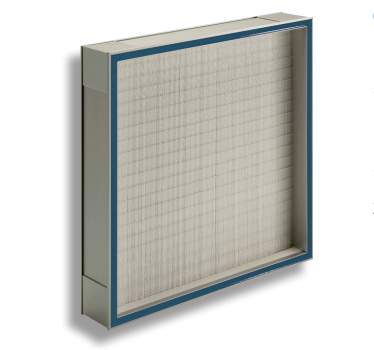
The Gel Seal model features a built-in channel within the filter frame filled with a specialized, non-flowing, and non-hardening urethane gel sealant.
-
Best For: Framing systems and housings equipped with a "knife-edge" seal. The knife-edge sinks into the gel to create a leak-proof, airtight barrier.
-
Dimensions: Available in filter frame depths of 4 ¾”.
-
Application: High-stakes pharmaceutical compounding and biotech labs.
B. Reverse Gel Seal (The "Ceiling Module" Solution)
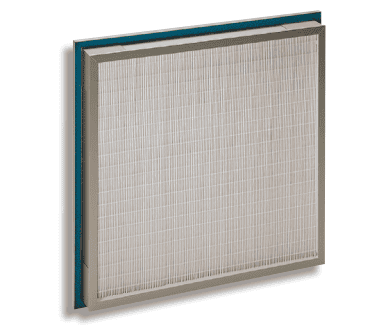
In this configuration, the built-in gel channel is located at the back of the upstream side of the filter.
-
Best For: This is an excellent replacement filter for permanently installed ducted ceiling modules.
It is designed for housings where the "knife-edge" is part of the ducted module itself. -
Application: Cleanroom ceiling retrofits where access is limited to the room side.
C. Neoprene Gasket Seal (The "Lay-In" Standard)
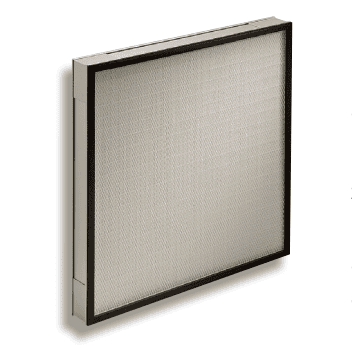
The most versatile option, featuring a ¾” wide by ¼” thick closed-cell neoprene gasket.
-
Best For: Standard "lay-in" frame systems. These models are typically furnished with the gasket on the downstream face of the filter.
-
Dimensions: Available in filter frame depths of 2 ¾”.
-
Customization: While aluminum is standard, wood cell sides are available upon request for specific disposal or environmental requirements.
3. High-Intent Industry Applications
Hospitals & Surgical Suites
In Operating Rooms (OR) and Airborne Infection Isolation Rooms (AIIR), capturing sub-micron pathogens is non-negotiable. The BioMAX CS provides the 99.99% efficiency needed to meet CDC and ASHRAE 170 standards while keeping noise levels low.
Pharmaceutical & Biotech
Maintaining ISO Class 5 conditions requires a filter that can withstand frequent integrity testing (DOP/PAO testing).
Microelectronics & Data Centers
For sensitive hardware, particle shedding is a disaster. The anodized aluminum frame of the BioMAX CS ensures no metallic or organic off-gassing, protecting high-value silicon wafers and server racks.
5. The Verdict: Is the BioMAX CS the Best Choice?
If your priority is compliance, energy efficiency, and ease of installation, the answer is yes. While traditional filters may have a lower upfront cost, the BioMAX CS pays for itself through reduced fan energy consumption and extended service life.
Ready to Secure Your Cleanroom Compliance?
Stop fighting with high-resistance filters that strain your HVAC system. Upgrade to the industry’s most reliable minipleat solution.
FAQ: Ordering the Right BioMAX CS
Which seal should I choose for a standard T-grid ceiling?
Usually the Neoprene Gasket Seal (2 ¾” depth). However, if your grid is a specialized "fluid seal" grid, you will need the Gel Seal (4 ¾” depth).
Does the BioMAX CS replace a standard 12" deep HEPA?
It can, but you must check your housing depth. Because the BioMAX CS is a minipleat, it is much thinner. You may need a spacer or a BioMAX V2000 model for 12" deep boxes.
Is the BioMAX CS scan-tested for leaks?
Yes. Every BioMAX CS is factory-tested and certified. You will receive a performance label on each filter indicating the tested efficiency and pressure drop.
Where can I source BioMAX CS filters with fast shipping?
You can source the full range of Koch BioMAX products, including specialized Gel and Gasket options, directly at