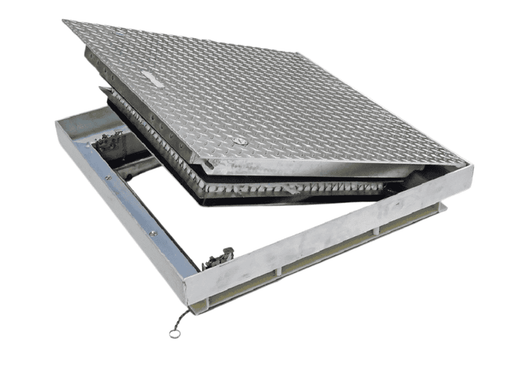
Posted by Spycor LLC on Feb 5th 2026
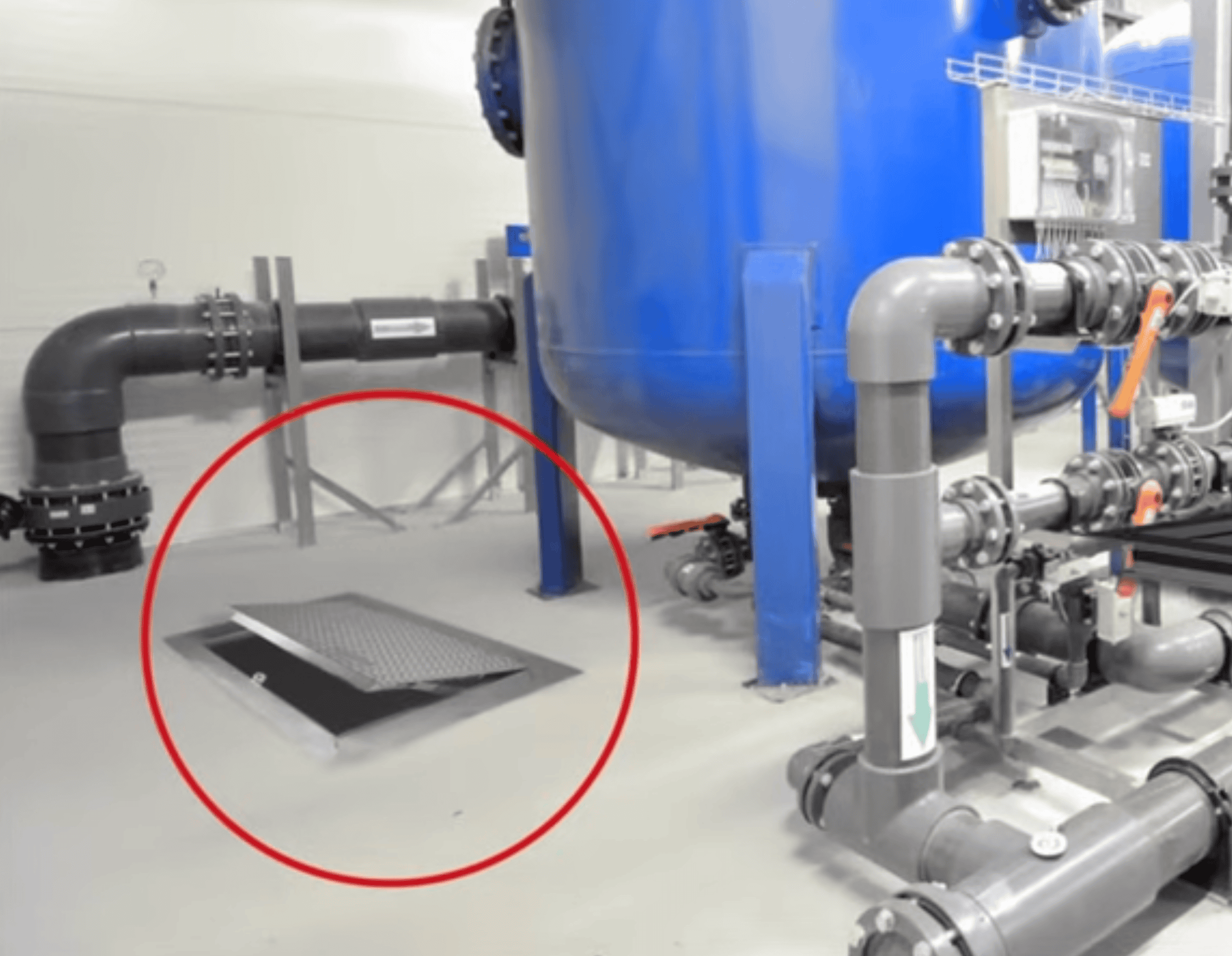
For a commercial contractor or facility manager, a floor hatch is more than just a door; it’s a critical piece of structural infrastructure. Choosing the wrong hatch doesn't just result in a poor fit—it can lead to catastrophic structural failure, fire code violations, or ADA non-compliance.
When your project demands access to underground utilities, mechanical rooms, or crawl spaces, you need a solution that balances safety with durability. This guide breaks down the technical specifications you need to consider to ensure you select the right floor hatch for your specific commercial application.
1. Understanding Load Ratings: Pedestrian vs. Vehicular
The most important question in floor hatch selection is: What is going to be moving over it? Selecting an insufficient load rating is the leading cause of hatch deformation and onsite injury.
Pedestrian Loading (150–300 psf)
These hatches are designed for areas with foot traffic only. Typical applications include office building hallways, mechanical closets, and schools. They are lightweight and usually easier to open, but they cannot withstand the weight of even a small motorized cart or pallet jack.
H-20 Vehicular Loading
If the hatch is located in a loading dock, parking garage, or warehouse floor, it must meet AASHTO H-20 or H-25 requirements. These hatches are engineered to support a wheel load of up to 16,000 lbs, making them safe for heavy truck traffic and heavy machinery.
2. Choosing the Right Frame Style for Water Management
Where the hatch is located—indoors vs. outdoors—dictates the type of frame you need.
Angle Frames (Non-Drainable)
An angle frame is the standard for interior applications where water infiltration is not a concern. The frame sits flush against the floor opening. It is cost-effective and simple to install in dry environments like equipment rooms.
Channel Frames (Drainable)
For exterior use or areas subject to wash-downs, a Channel Frame is mandatory. These frames feature an integrated gutter system that catches water and diverts it to a 1-½” drainage coupling. This prevents water from seeping into the space below, protecting sensitive electrical or mechanical equipment.
3. Material Selection: Aluminum vs. Steel
Commercial floor hatches are primarily manufactured in aluminum or galvanized steel. The environment determines the winner.
-
Aluminum: The industry favorite. It is naturally corrosion-resistant, making it perfect for coastal environments, wastewater treatment plants, and exterior sidewalks. It is also significantly lighter, reducing the strain on lift-assist springs.
-
Galvanized Steel: Best for high-traffic industrial environments where extreme durability and impact resistance are required. Steel is generally more cost-effective but requires a high-quality galvanized finish to prevent rust in damp conditions.
4. Aesthetic Integration: Diamond Plate vs. Recessed Infill
In high-end commercial spaces like hotel lobbies or corporate offices, a standard metal "manhole" look is often unacceptable.
Diamond Plate (Non-Slip)
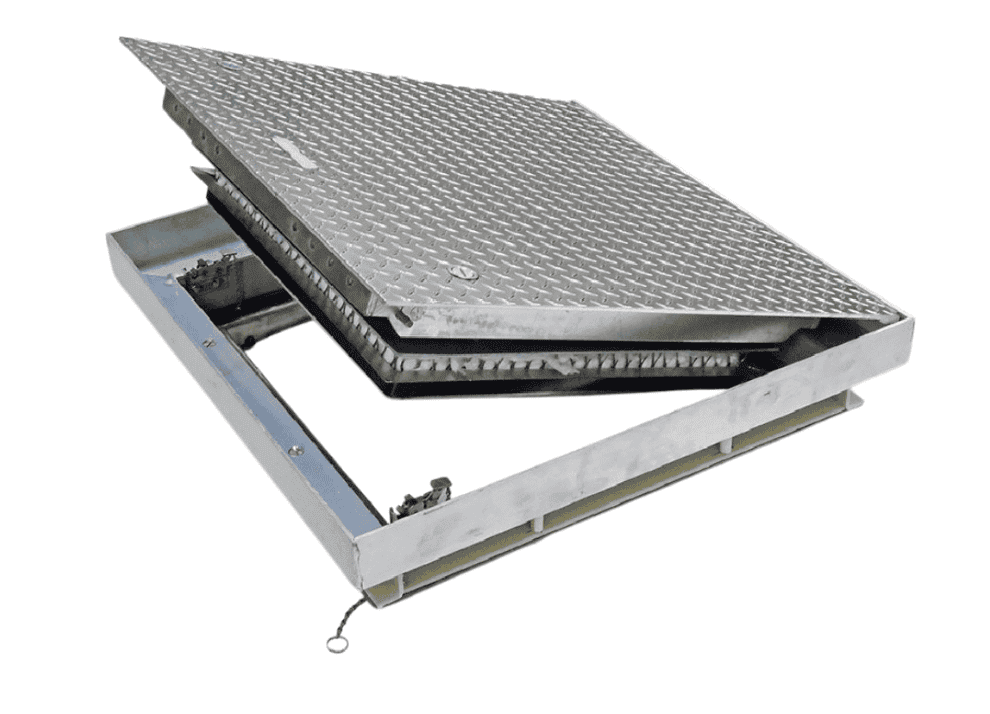
The traditional choice for industrial settings. The "checkered" pattern provides essential slip resistance for workers, even when the surface is wet or oily.
Recessed for Infill (The "Invisible" Hatch)
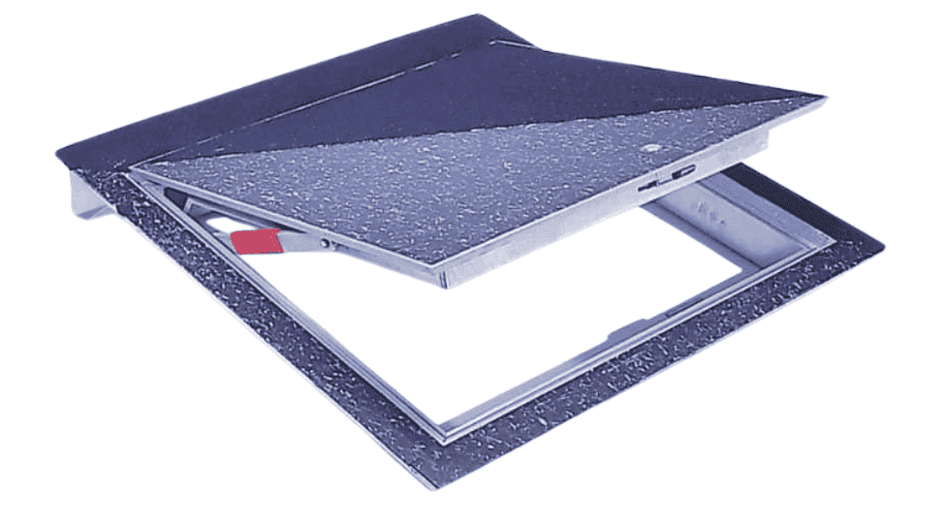
Recessed hatches feature a "pan" cover designed to accept 1/8", 1/2", or 1" of flooring material. This allows you to install tile, carpet, or terrazzo directly into the hatch cover. When closed, only a thin metal edge is visible, maintaining the aesthetic integrity of the floor.
5. Fire-Rated Floor Hatches and Compliance
If the floor assembly is fire-rated, the access hatch must match that rating to prevent the spread of smoke and flames between floors.
Fire-rated floor hatches are equipped with heat-sensitive cables and automatic closing mechanisms. In the event of a fire, the hatch will automatically shut and lock, maintaining the fire barrier for 1 to 3 hours, depending on the model. This is a non-negotiable requirement for high-rise buildings and multi-occupancy commercial structures.
6. Safety Features and OSHA Requirements
OSHA strictly regulates floor openings to prevent falls. Every professional commercial hatch should include:
-
Safety Gratings: An integrated secondary mesh that stays in place even when the hatch is open.
-
Hold-Open Arms: Mechanical locks that prevent the door from accidentally slamming shut during maintenance.
-
Lift Assistance: Compression springs that allow a single worker to open a heavy H-20 hatch with minimal effort.
Buy Professional Floor Hatches at Spycor.com
Don't settle for "close enough" when it comes to structural access. Spycor.com offers a full range of aluminum, steel, and fire-rated floor hatches designed for the most demanding commercial environments.
Shop Our Commercial Floor Hatch Inventory:
Whether you need a recessed hatch for a lobby or an H-20 rated door for a warehouse, we have the stock to keep your project on schedule.
Selecting the right floor hatch requires a balance of load requirements, environmental factors, and aesthetic needs. By choosing the correct material and frame style, you ensure a safe, long-lasting access point for your facility.
Browse All Floor Hatches & Access Doors at Spycor.com
Frequently Asked Questions (FAQ)
1. What is an H-20 load rating?
H-20 refers to the AASHTO standard for "Bridge Design," signifying the hatch can support a 32,000 lb. axle load (16,000 lbs per wheel). This is the standard for any hatch that may be driven over by a truck.
2. Can I install a floor hatch myself?
In a commercial setting, floor hatches should be installed by a qualified contractor to ensure the structural integrity of the floor and to verify that the hatch is perfectly level to prevent tripping hazards.
3. Are these hatches ADA compliant?
Most diamond plate and recessed hatches are designed with flush-mounted hardware and handles to meet ADA requirements for a slip-resistant, "no-trip" surface in public walkways.
4. How do I measure for a replacement hatch?
Always measure the clear opening (the hole in the floor), not the outside of the old frame. Hatch sizes are listed by the dimensions of the opening they are designed to cover.
5. Do you offer custom sizes?
Yes. While we carry standard sizes in stock, many commercial floor hatches can be custom-ordered to fit unique architectural openings.