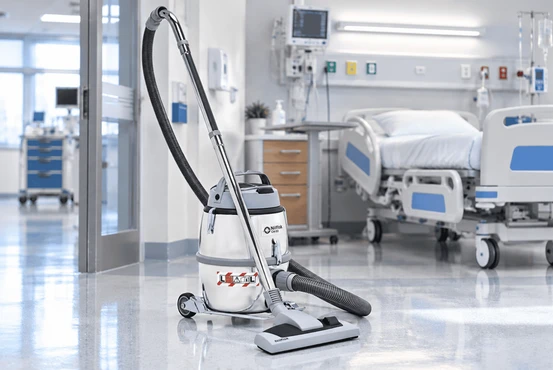
Posted by Spycor LLC on Oct 8th 2026
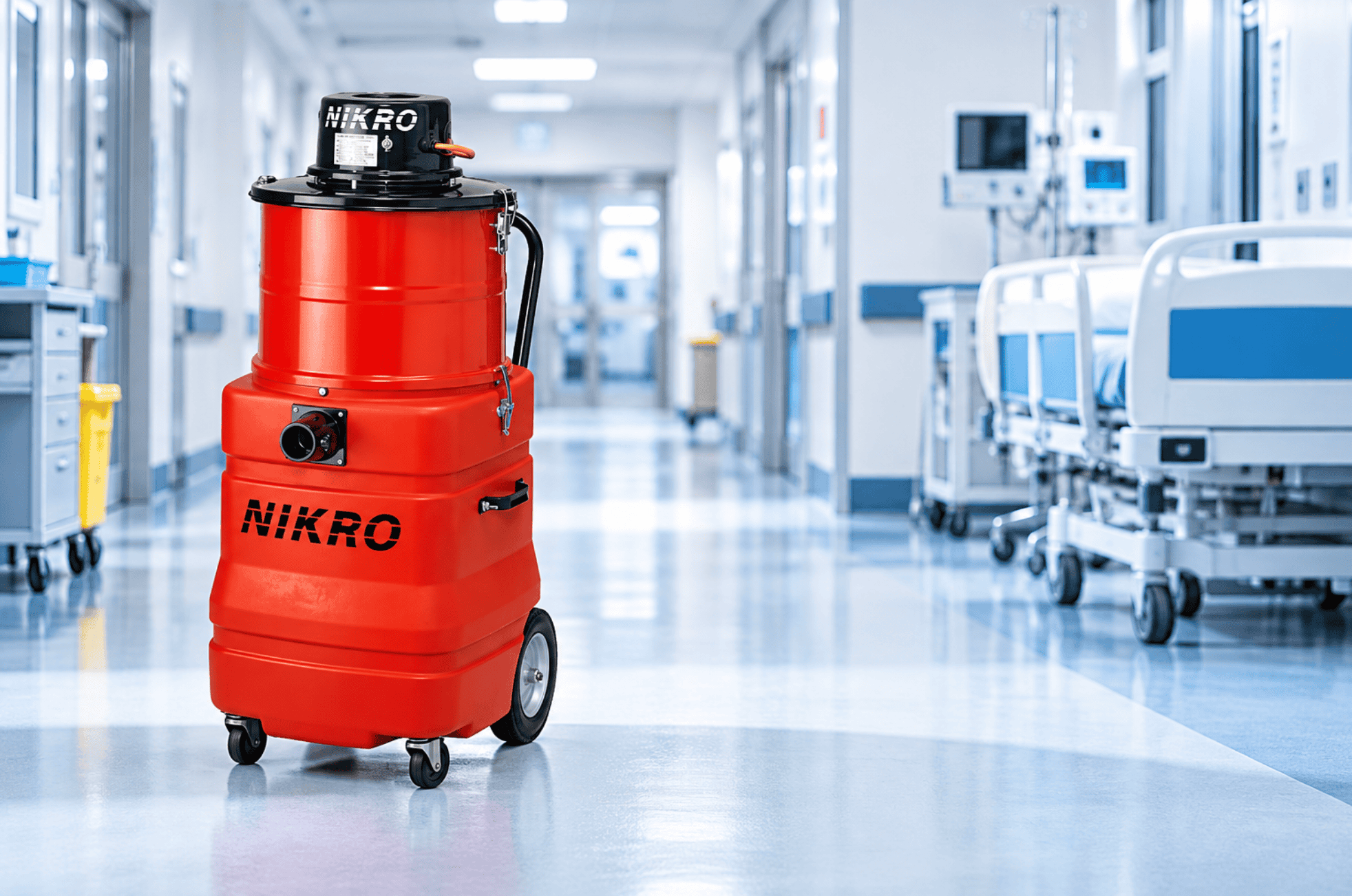
The best HEPA vacuum for hospital cleaning is the Minuteman Hospital Vacuum: a 15-gallon stainless steel wet/dry unit with a HEPA filter tested to IEST standards, designed by Minuteman for areas housing high-risk patients. Where your facility specifies ULPA filtration, step up to a ULPA unit. For targeted cleanup in hard-to-reach spaces, a backpack HEPA vacuum is easier to carry.
Vacuum choice matters most around high-risk patients. In protective environments for severely immunocompromised patients, the CDC calls for a vacuum equipped with HEPA filters whenever vacuuming is needed. For other areas, your facility's infection prevention team sets the standard.
Spycor Environmental has supplied HEPA and containment equipment for occupied healthcare construction and abatement for more than 20 years. Below are five HEPA and ULPA vacuums we stock, each matched to the hospital areas and jobs it fits best.
The 5 Best HEPA Vacuums for Hospitals and Healthcare Facilities
- Best overall for hospitals: Minuteman Hospital Vacuum with HEPA Filtration. 15-gal stainless tank, 4-stage filtration, wet/dry.
- Best where ULPA filtration is specified: Nilfisk GM 80 ULPA Industrial Vacuum. ULPA as standard, compact and quiet.
- Best for targeted cleanup in hard-to-reach areas: Nikro BP00288 Back-Pak HEPA Vacuum. 16 lb, worn on a harness.
- Best quiet, compact pick for routine patient-area cleaning: Nilfisk Euroclean GD930 PRO HEPA. Low-noise canister with an upstream HEPA filter.
- Best for wet maintenance cleanup: Nikro PW15110 15-Gallon HEPA Wet/Dry. 99.99% HEPA, 5-stage filtration.
How We Chose These Vacuums
We selected these five from the HEPA and ULPA vacuums Spycor carries, using five criteria:
- Filtration: true HEPA (99.97% at 0.3 µm) or ULPA, as stated by the manufacturer.
- Published specs: every figure below comes from the manufacturer's own product page, linked in each review.
- A distinct job: each vacuum covers a different cleaning application, not five versions of the same machine.
- Serviceability: replacement filters and bags are available.
- Budget range: $495 to $4,284.
Spycor sells all five products. We have not tested them in clinical settings, so have your infection prevention team approve any vacuum before it is used in patient areas.
Hospital HEPA Vacuum Comparison Table
All five use true HEPA or ULPA filtration. Filtration and capacity come from each manufacturer's product page; airflow figures are listed in each review.
Vacuum |
Filtration |
Capacity |
Wet or dry |
Best application |
|---|---|---|---|---|
|
HEPA 99.97% @ 0.3 µm, tested to IEST-RP-CC007; 4 stages |
15 gal, stainless steel |
Wet/dry |
Daily cleaning in high-risk patient areas |
|
|
ULPA, standard |
Compact canister |
Dry |
Controlled environments where ULPA is specified |
|
|
HEPA 99.97% @ 0.3 µm |
2.5 gal |
Dry |
Targeted cleanup in hard-to-reach areas |
|
|
Upstream HEPA filter in lid |
15 L (about 4 gal) |
Dry |
Routine cleaning of patient rooms, corridors and anterooms |
|
|
HEPA 99.99% @ 0.3 µm; 5 stages |
15 gal, polyethylene |
Wet/dry |
Wet maintenance cleanup: leaks and spills |
Why Hospitals Need a True HEPA Vacuum
A HEPA vacuum captures fine dust and fungal spores instead of exhausting them back into the room. That matters most around high-risk patients. The CDC's protective-environment guidance, written for patients such as allogeneic stem cell transplant recipients, calls for a HEPA-equipped vacuum whenever vacuuming is needed. The CDC describes high-risk patients as those with severely deficient immune defenses, including patients on intensive chemotherapy.
Three things separate a hospital-grade HEPA vacuum from a commercial one:
- True HEPA, not "HEPA-type." True HEPA captures 99.97% of particles at 0.3 microns. "HEPA-type" and "HEPA-style" filters meet no test standard.
- A tested filter. Look for a filter tested to a named standard, such as IEST-RP-CC007, or an individually tested serial number.
- A sealed system. If air can leak around the filter or through the housing, the HEPA rating means nothing. Gasketed filters and sealed lids keep all exhaust air passing through the filter.
Renovation and construction inside an occupied facility is a separate job, governed by an Infection Control Risk Assessment (ICRA). For that work, see ASHE's ICRA 2.0 toolkit and our guide to ICRA air scrubbers and negative air machines.
The 5 Best HEPA Vacuums for Hospitals, Reviewed
1. Minuteman Hospital Vacuum with HEPA Filtration: Best Overall for Hospitals
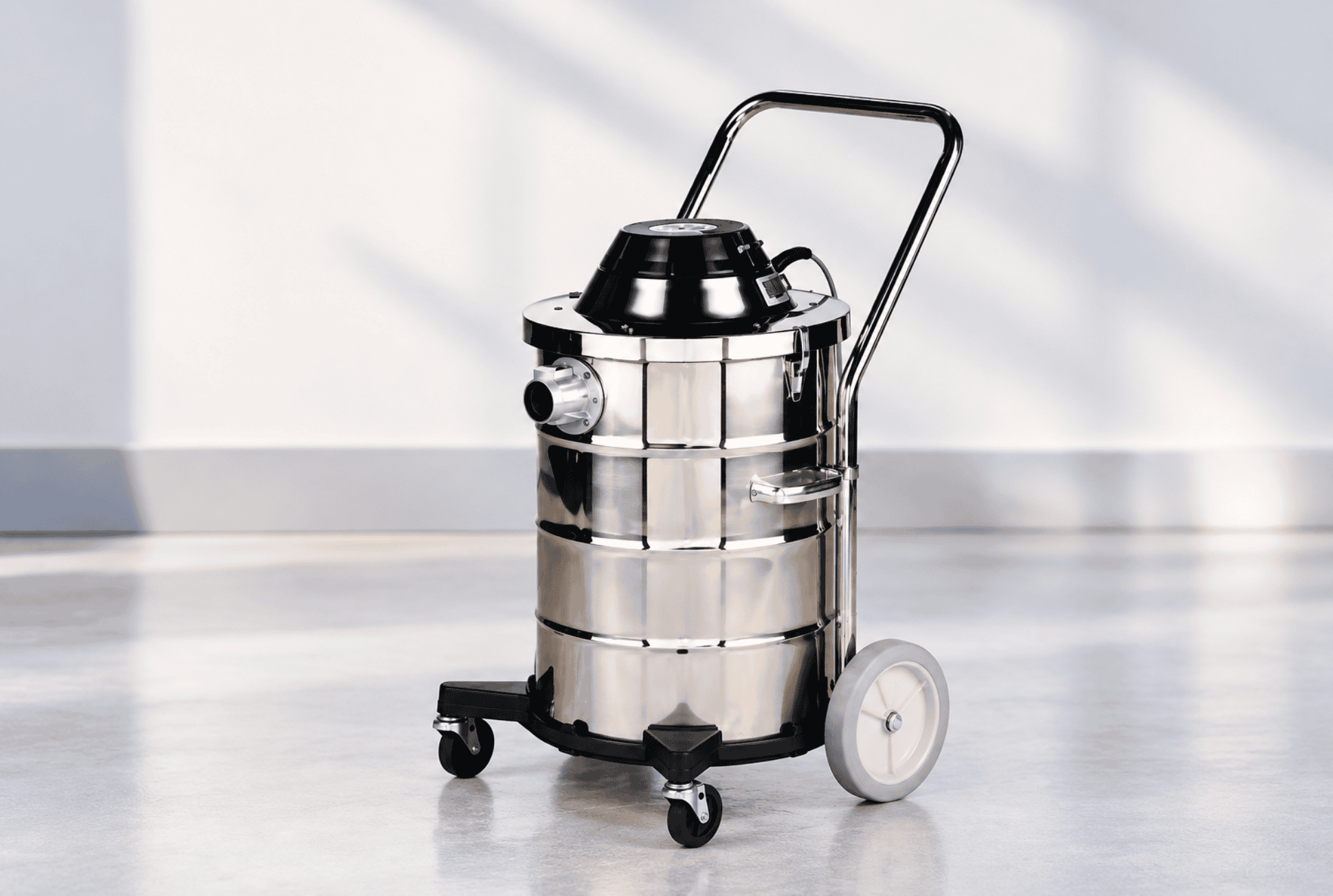
The Minuteman Hospital Vacuum is built for hospitals. Minuteman designs it for any area housing immunosuppressed, high-risk patients and for Joint Commission readiness.
- Filtration: 4 stages (filter protector, washable cloth filter, pre-filter, HEPA). HEPA rated 99.97% at 0.3 µm, tested to IEST-RP-CC007.
- Tank: 15-gallon stainless steel, wet/dry. Confirm your approved disinfectants with Minuteman before wipe-downs.
- Power: 2.3 HP, 110 CFM, 105" static lift, 50-ft cord.
- Hospital-friendly design: the lid diffuses exhaust along the tank to limit stirring of settled dust, and a light signals when filters need service.
Watch out for: the highest price on this list. Keep spare disposable filters on hand.
See price and availability for the Minuteman Hospital Vacuum →
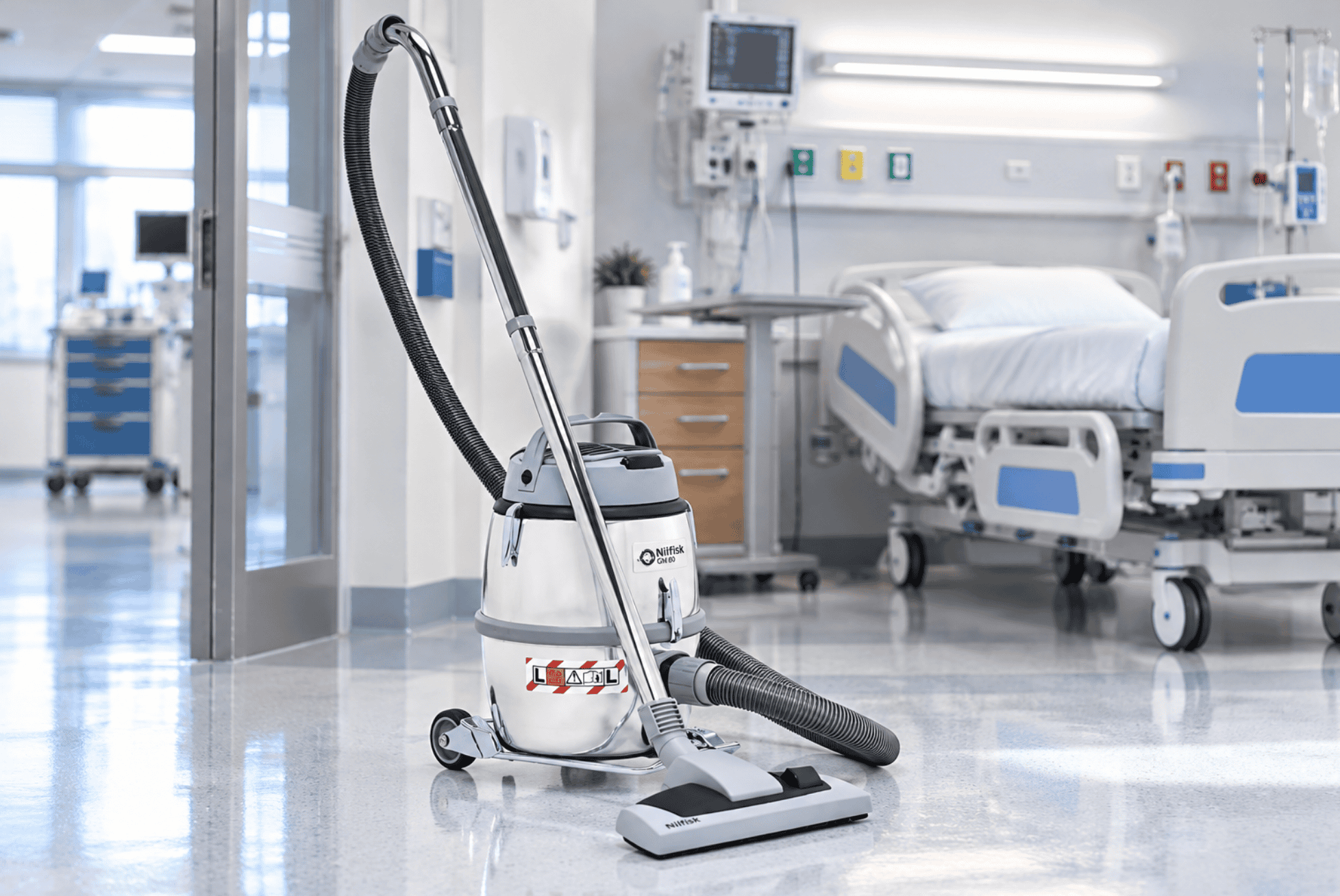
2. Nilfisk GM 80 ULPA: Best Where ULPA Filtration Is Specified
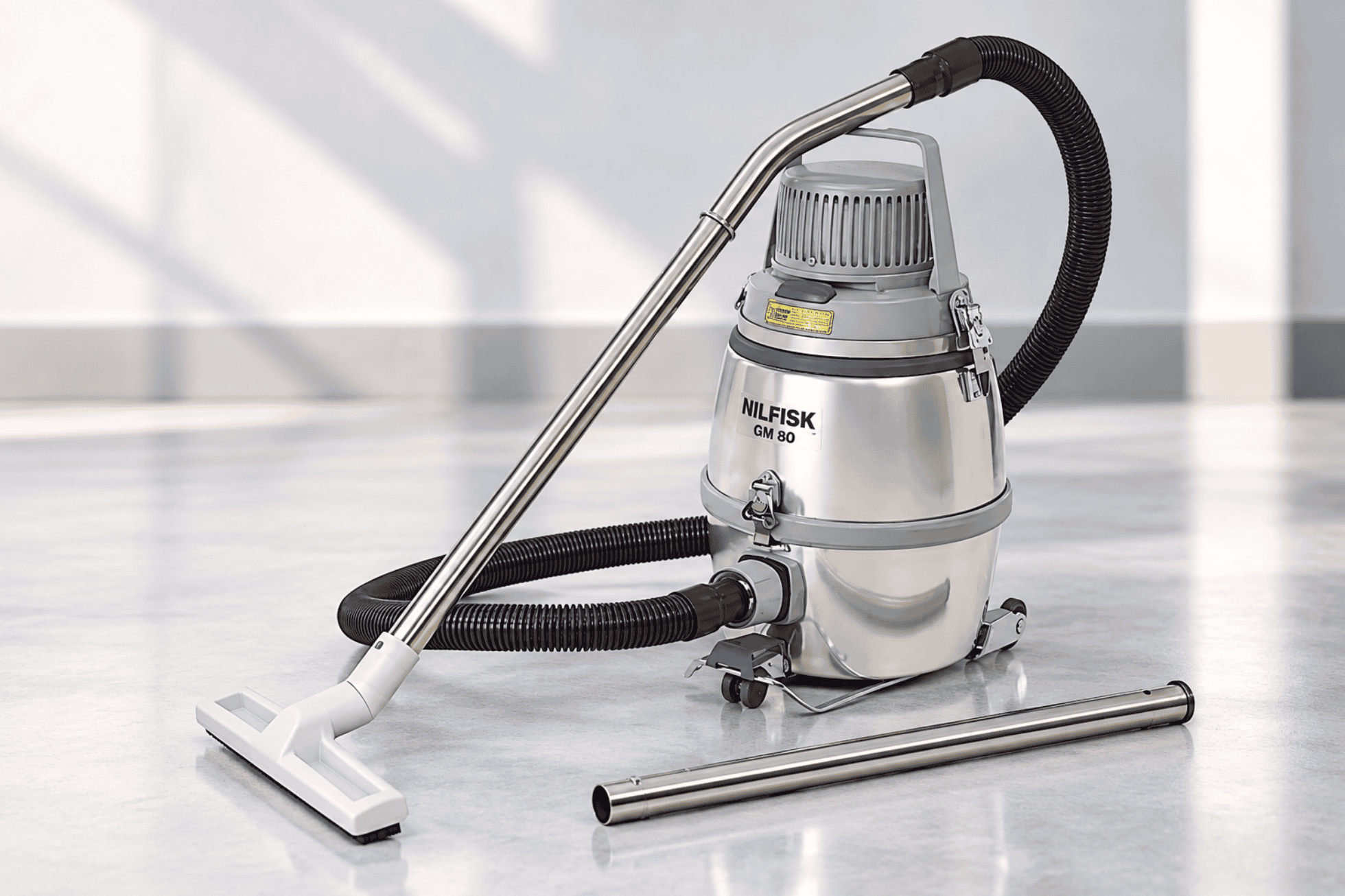
ULPA filters capture finer particles than HEPA. Some facilities specify ULPA for controlled environments; when yours does, the G 80 is a compact option. Nilfisk calls it its cleanroom solution with industrial performance.
- Filtration: ULPA as standard, with a motor protection filter and sack filter.
- Size: compact, lightweight and easy to store between procedures.
- Noise: quiet operation for occupied clinical areas.
- Cord: 30 ft. Model number 905 6302 010.
Watch out for: dry pickup only, and ULPA filters cost more to replace. Higher filtration alone doesn't make a vacuum right for a sterile area; your infection prevention team should approve it for that use.
See price and availability for the Nilfisk GM 80 ULPA →
3. Nikro BP00288 Back-Pak HEPA Vacuum: Best for Targeted Cleanup in Hard-to-Reach Areas
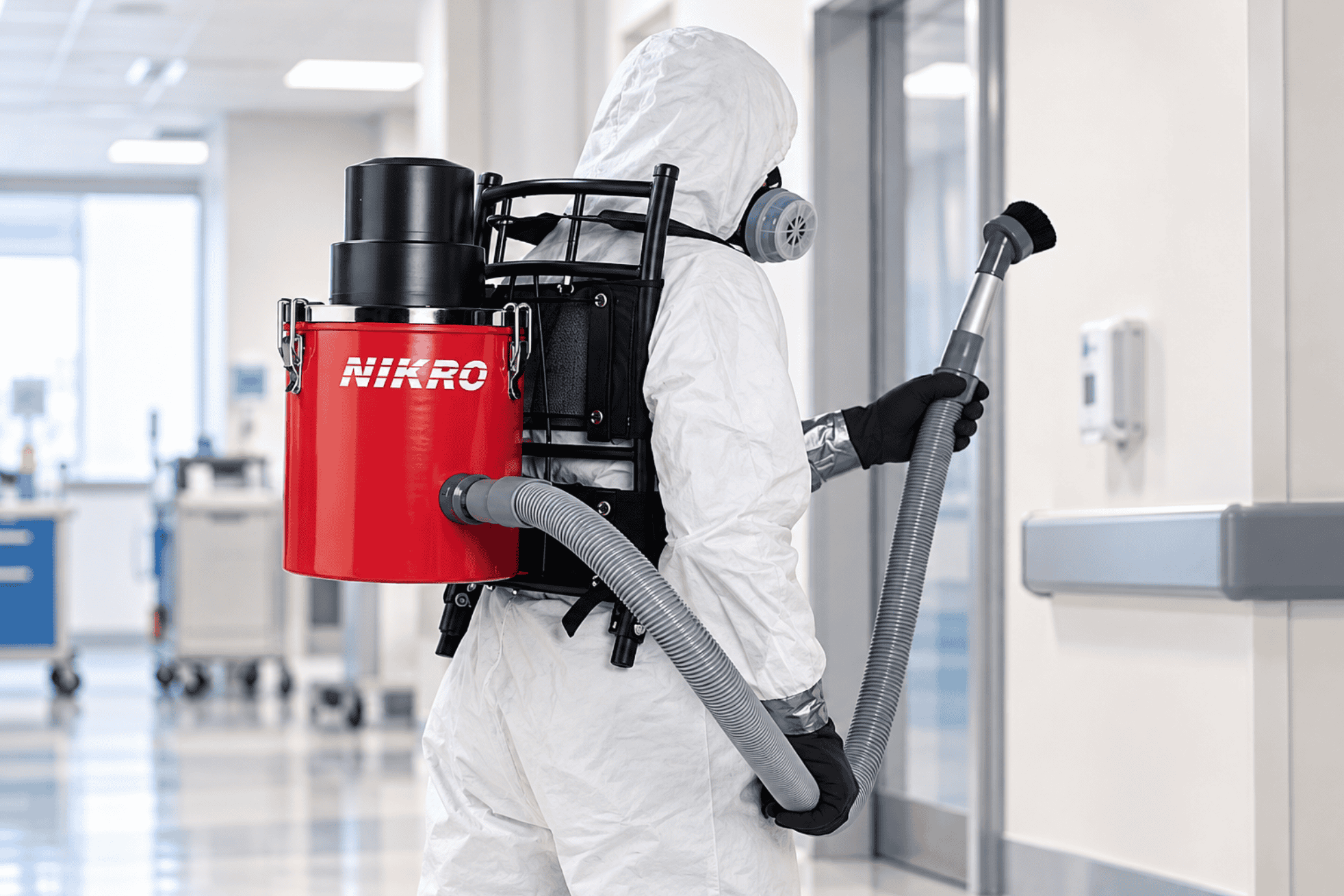
Some dust sits where a canister can't follow: above-ceiling spaces, mechanical rooms and tight corners. A backpack HEPA vacuum lets staff do targeted dry cleanup there without dragging a canister across patient floors.
- Filtration: HEPA 99.97% at 0.3 µm.
- Weight: 16 lb with an ergonomic harness.
- Power: 1.25 HP, 95 CFM, 88" water lift; 2.5-gal capacity.
- Included: hose, crevice tool, dust brush, utility tool and 2-piece wand.
Watch out for: small capacity and dry pickup only. Follow your facility's safe-access procedures for any elevated work.
See price and availability for the Nikro BP00288 →
4. Nilfisk Euroclean GD930 PRO HEPA: Best Quiet, Compact Pick for Patient Areas
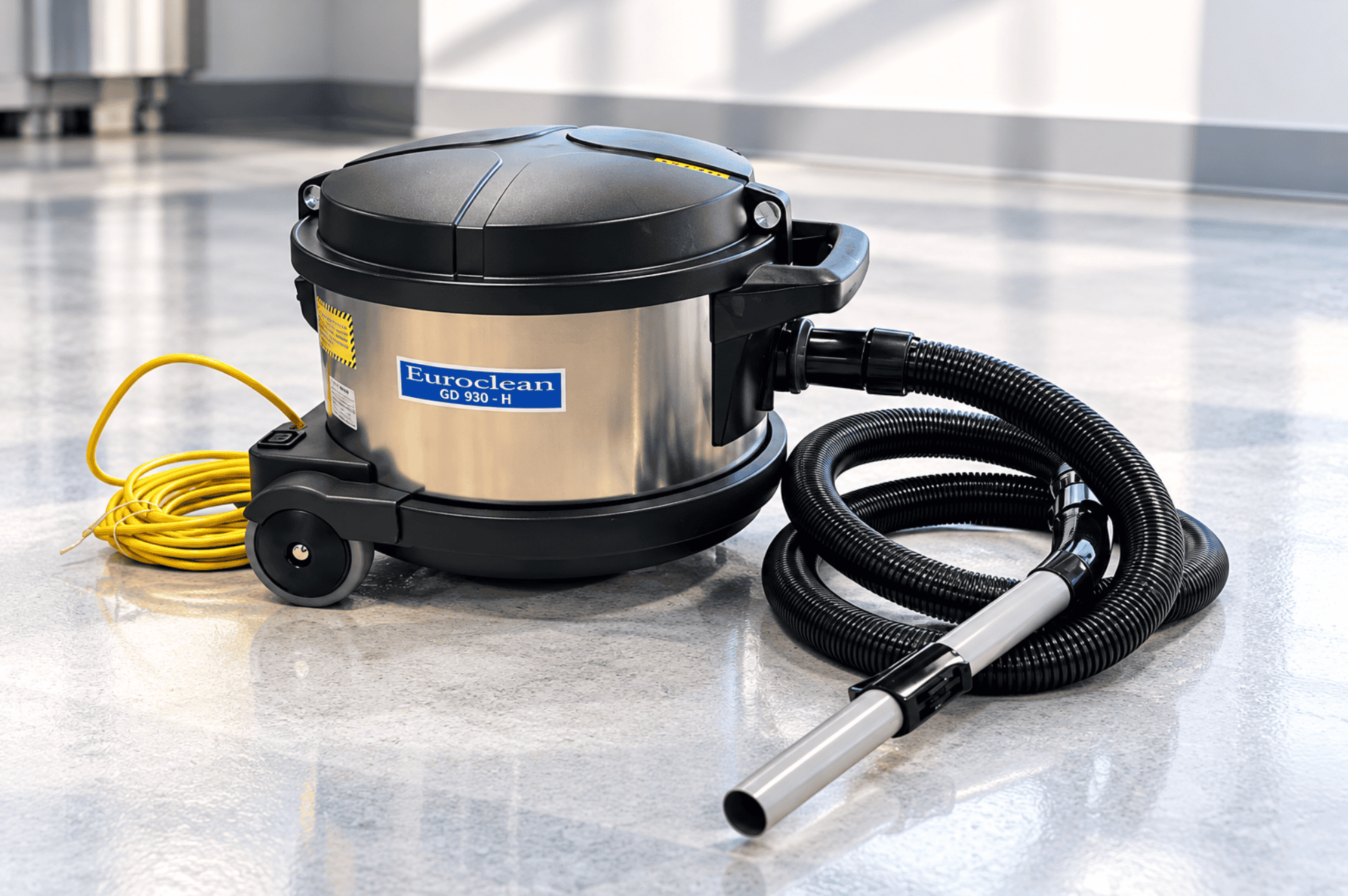
The GD930 PRO is the budget pick for routine HEPA vacuuming near patients. Nilfisk built it around low sound levels for non-intrusive cleaning, which matters on night shifts.
- Filtration: upstream HEPA filter in the lid that protects the motor and is easy to replace.
- Capacity: 15 L net filling with fleece bags, so fewer bag changes.
- Design: detachable cord and improved cable storage.
- Consumables: replacement HEPA filter and 10-pack bags in stock at Spycor.
Watch out for: not built for construction debris or liquids. Pair it with a heavier unit for ICRA cleanup.
See price and availability for the GD930 PRO →
5. Nikro PW15110 15-Gallon HEPA Wet/Dry: Best for Wet Cleanup
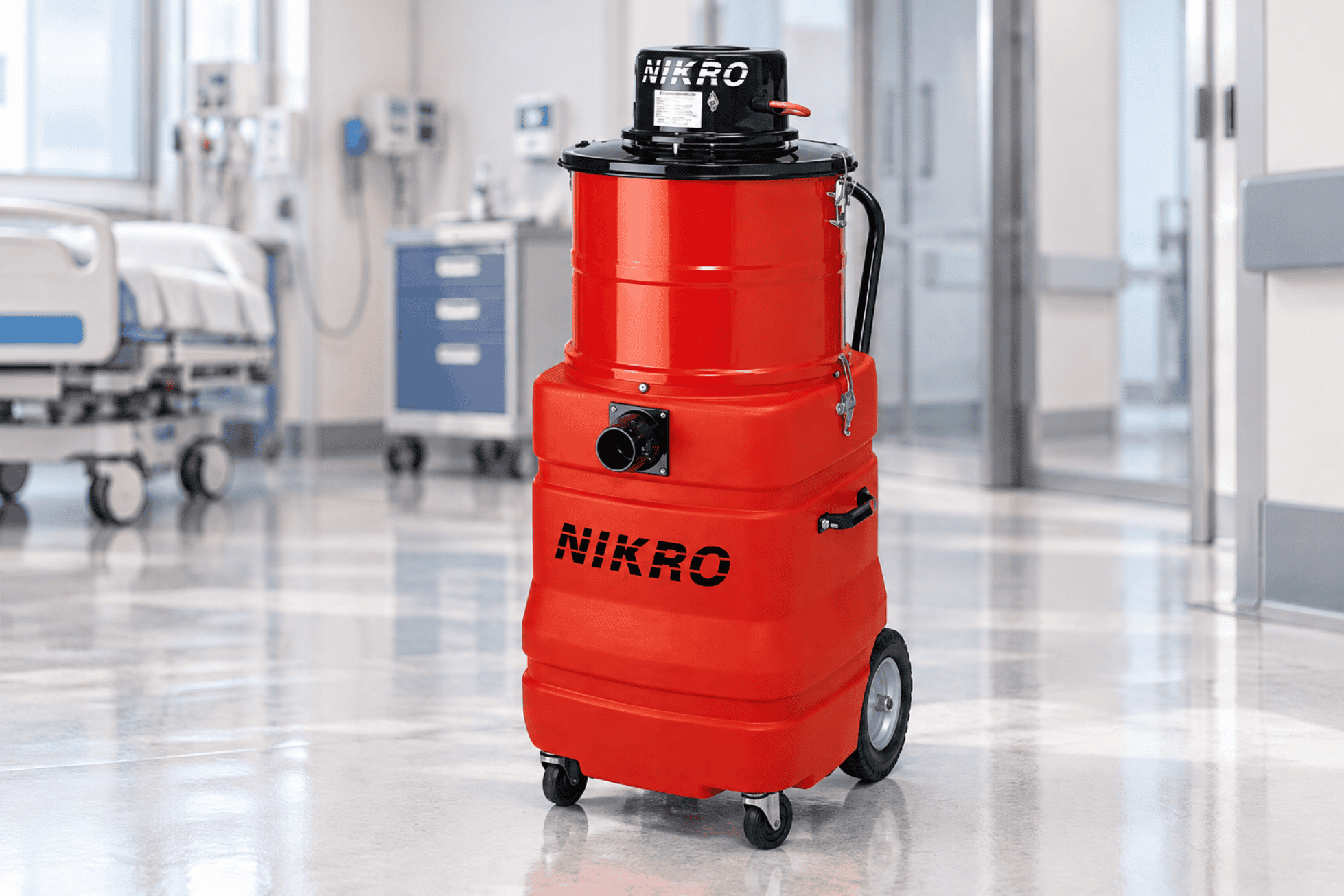
Pipe leaks, spills and flooded mechanical rooms need a vacuum that picks up water without giving up HEPA filtration.
- Filtration: 5 stages with a HEPA filter rated 99.99% at 0.3 µm.
- Power: 2 HP, 115 CFM, 110" water lift.
- Tank: 15-gal dent- and corrosion-proof polyethylene, warranted 5 years.
- Mobility: cart assembly; 65 lb.
Watch out for: tools are sold separately. At 65 lb it is a cart unit, not a carry unit.
See price and availability for the Nikro PW15110 →
How to Choose a HEPA Vacuum for Different Healthcare Cleaning Applications
Choose by cleaning application, then confirm the unit fits your facility's protocols. Most facilities need two or three vacuums, not one.
Cleaning application |
What to evaluate |
Vacuum to consider |
|---|---|---|
|
Routine patient-area cleaning |
Noise, maneuverability, filtration, facility cleaning protocols |
|
|
High-risk patient areas |
Tested HEPA filter, sealed housing, easy-to-clean tank, infection prevention approval |
|
|
Specialized controlled environments |
Required filtration standard, equipment approval, cleaning procedures |
|
|
Above-ceiling and hard-to-reach maintenance |
Portability, dust containment, safe access |
|
|
Wet maintenance cleanup |
Wet/dry capability, approved liquid collection, cleaning and disinfection |
Before you buy, confirm each unit has:
- True HEPA (99.97% at 0.3 µm) or ULPA, never "HEPA-type"
- A filter tested to a named standard, with documentation from the manufacturer
- A sealed, gasketed filter housing
- Surfaces compatible with your facility's approved disinfectants (confirm with the manufacturer)
- Wet/dry capability if the area has any liquid risk
- Low noise if it runs near patients or at night
- Replacement filters and bags available from your supplier
Ask your infection prevention team to approve the vacuum for each area before purchase. Manufacturers can supply spec sheets and filter test documentation to support that review.
How to Maintain a HEPA Vacuum in a Hospital
A HEPA vacuum only protects patients while its filters and seals are intact. Follow your facility's infection control plan and the manufacturer's manual; this is the baseline routine.
- Inspect seals and hoses before each shift. A cracked gasket or loose hose lets unfiltered air escape.
- Empty and change bags outside patient areas, ideally inside containment or a soiled utility room.
- Replace pre-filters often to extend HEPA filter life. Change the HEPA filter when airflow drops or the service light comes on.
- Handle used HEPA filters gently. Don't tap or drop them; bag and seal them for disposal, and wear the PPE your plan requires.
- Disinfect the exterior, wheels and cord before the unit moves between units or wings.
- Log filter changes with date and unit number, useful evidence during a Joint Commission survey.
Need help matching vacuums to your facility or ICRA project? Call Spycor Environmental at 1-877-293-0784 or browse all HEPA vacuums and ULPA vacuums.
Frequently Asked Questions
What is the best HEPA vacuum for hospitals?
The Minuteman Hospital Vacuum is the best all-round HEPA vacuum for hospitals. It has a 15-gallon stainless steel wet/dry tank, 4-stage filtration and a HEPA filter tested to IEST-RP-CC007. Where a facility specifies ULPA filtration, the Nilfisk GM 80 ULPA is a compact alternative.
Does the CDC require HEPA vacuums in hospitals?
Not for every area. The CDC's guidance for protective environments, which house severely immunocompromised patients, calls for a HEPA-equipped vacuum whenever vacuuming is needed there. For other areas, your facility's infection control plan sets the standard.
What is the difference between HEPA and ULPA vacuums?
HEPA filters capture 99.97% of particles at 0.3 microns. ULPA filters capture even smaller particles at a higher efficiency. HEPA covers most healthcare cleaning; choose ULPA where your facility's specifications call for it.
Can I use a regular commercial vacuum in a hospital?
It depends on the area and your facility's protocols. In protective environments for high-risk patients, the CDC calls for HEPA-equipped vacuums. Elsewhere, many facilities still prefer sealed, true HEPA units because standard filters can release fine dust back into the air.
How often should you change a hospital vacuum's HEPA filter?
Change it when airflow drops noticeably or the unit's service indicator comes on, and after any job with hazardous material. Replace pre-filters and bags more often to protect the HEPA filter. Always change filters away from patient areas.
Do you need a HEPA vacuum for hospital renovation and ICRA work?
Renovation work falls under your facility's Infection Control Risk Assessment (ICRA), which sets the cleanup precautions, often including HEPA vacuuming. See ASHE's ICRA 2.0 toolkit and our guide to containing construction dust in hospitals.