Posted by Spycor Building on Jul 10th 2026
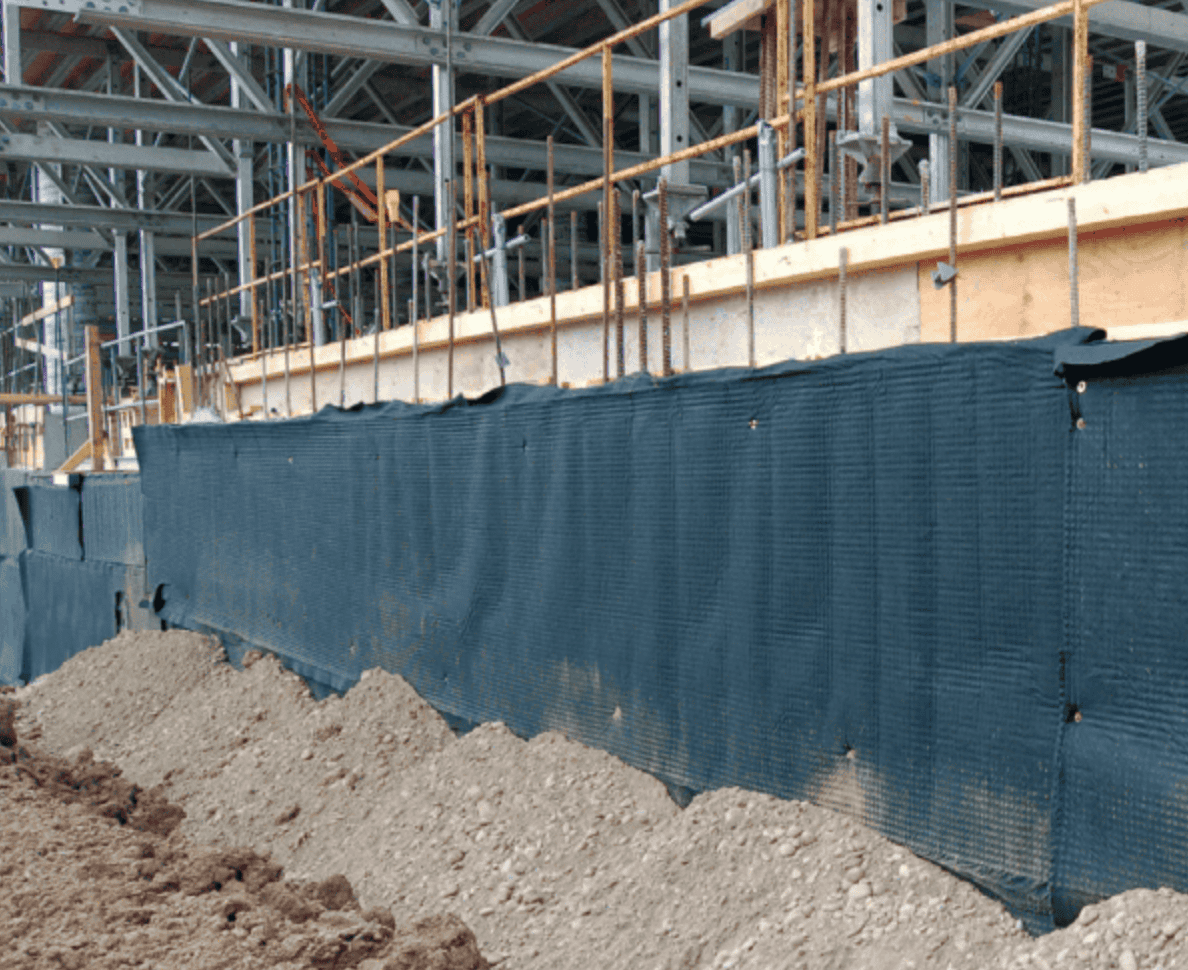
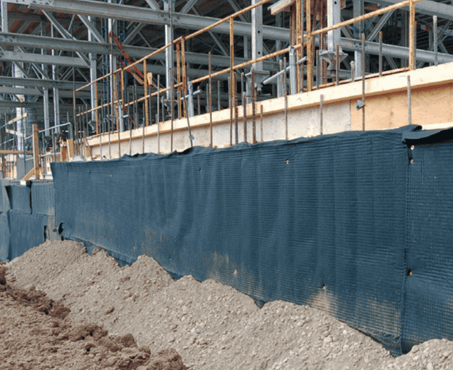
Specify DELTA-DRAIN 6200 HI-X when the drainboard sits directly against a soft or sheet-applied waterproofing membrane — its polymeric protection sheet stops die-cutting and cold flow. Specify DELTA-DRAIN 6000 HI-X where there's no membrane to protect, such as against cured concrete or a lagging wall. Both share the same 15,000+ psf compressive strength and 45+ ft depth rating.
Getting this call wrong doesn't show up on day one. It shows up two or three years into a building's life, when a waterproofing membrane that's been slowly punctured by drainboard dimples finally lets water into a below-grade wall. For general contractors, waterproofing subs, and civil engineers speccing foundation drainage, the choice between DELTA-DRAIN 6200 HI-X and DELTA-DRAIN 6000 HI-X isn't cosmetic — it's the difference between a drainage system that protects the membrane underneath it and one that can slowly destroy it.
What Die-Cutting and Cold Flow Actually Do to a Membrane
Most sheet and liquid-applied waterproofing membranes stay slightly soft after they cure. That's normal — it's part of how they self-seal around small punctures. The problem is that a standard drainboard's dimpled core sits directly against that soft membrane, and under the weight of backfill soil, those dimples can slowly press into it. Over time the membrane can flow into the dimple pattern, form a bubble, and eventually rupture. That's cold flow. Die-cutting is the more direct version of the same problem — the edges of a rigid dimpled core physically cutting into a soft membrane under load.
DELTA-DRAIN 6200 HI-X solves this with a polymeric (LDPE) protection sheet bonded to the back of the dimpled core, on the side that faces the membrane. It's the same core and the same compressive strength as 6000 HI-X — the only difference is that added protective layer. That one layer is what makes 6200 HI-X the correct choice any time drainboard is going over waterproofing rather than against bare concrete.
DELTA-DRAIN 6200 HI-X vs. 6000 HI-X: Side-by-Side
| Spec | 6200 HI-X | 6000 HI-X |
|---|---|---|
| Layers | 3 (core + geotextile + LDPE protection sheet) | 2 (core + geotextile) |
| Compressive strength | 15,000+ psf | 15,000+ psf |
| Max installation depth | 45+ ft | 45+ ft |
| Protects waterproofing membrane from die-cutting | Yes | No |
| Roll sizes | 4' x 50', 6' x 50' | 4' x 50', 6' x 50' |
| Best against | Soft/sheet-applied waterproofing membranes | Bare concrete, lagging walls, no membrane present |
| Typical use | Foundation walls with waterproofing, parking structures | Soldier pile/lagging walls, retaining walls, bridge abutments |
Which One Do You Actually Need?
Ask one question: Is there a waterproofing membrane between the drainboard and the wall?
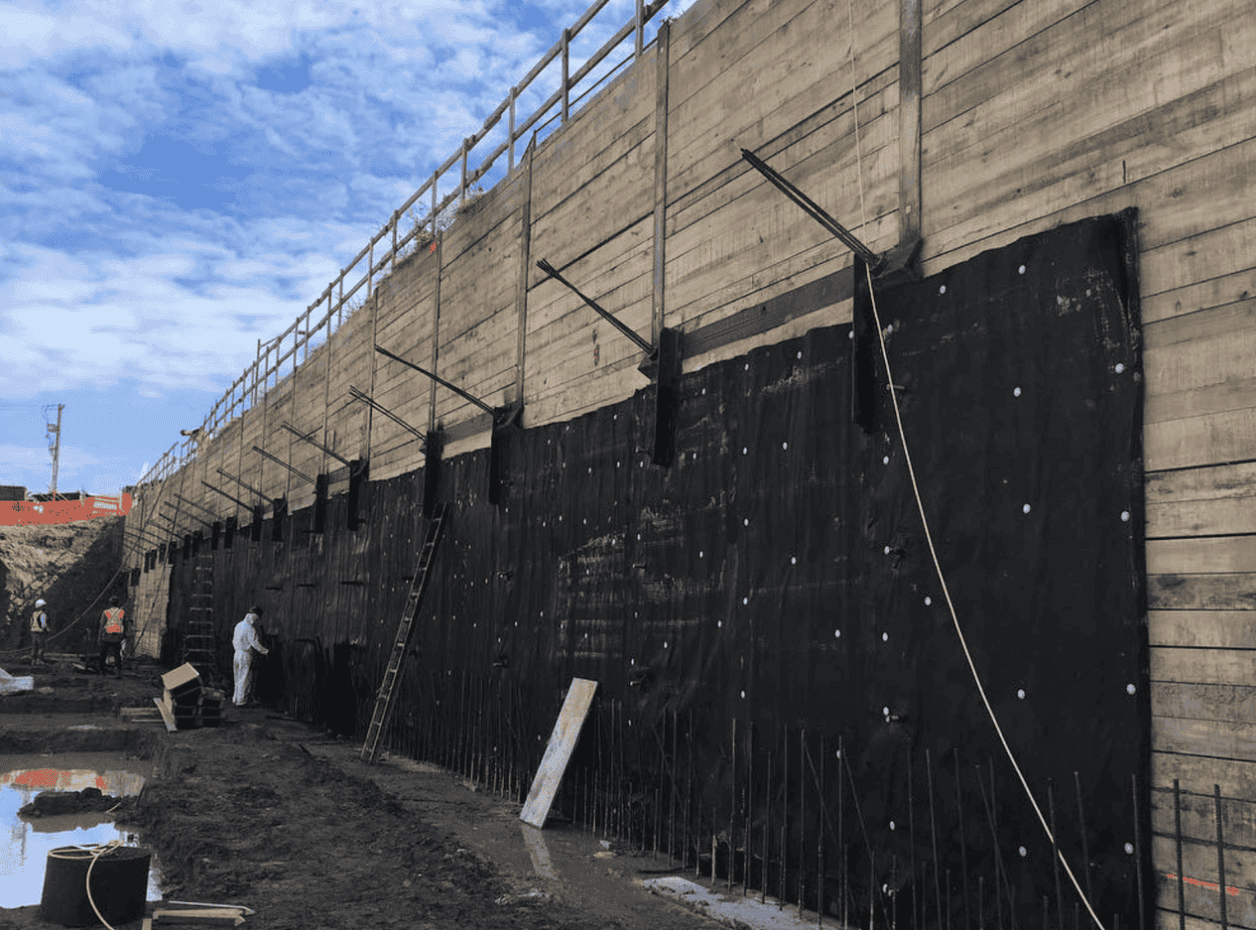
- Yes, there's a membrane (spray-applied, sheet-applied, or hot rubber waterproofing on a foundation wall) → use 6200 HI-X. This is the standard call for most commercial foundation waterproofing assemblies and below-grade parking structure walls.
- No membrane — bare concrete, shotcrete, or a soldier pile/lagging wall → 6000 HI-X is sufficient and typically the more economical option, since you're not paying for protection you don't need.
If you're draining a horizontal surface instead — a plaza deck, split slab, or pavement over a structure — neither of these is the right product; that's DELTA-DRAIN 9000 HI-X, built for high compressive loads in horizontal applications.
Where These Get Installed
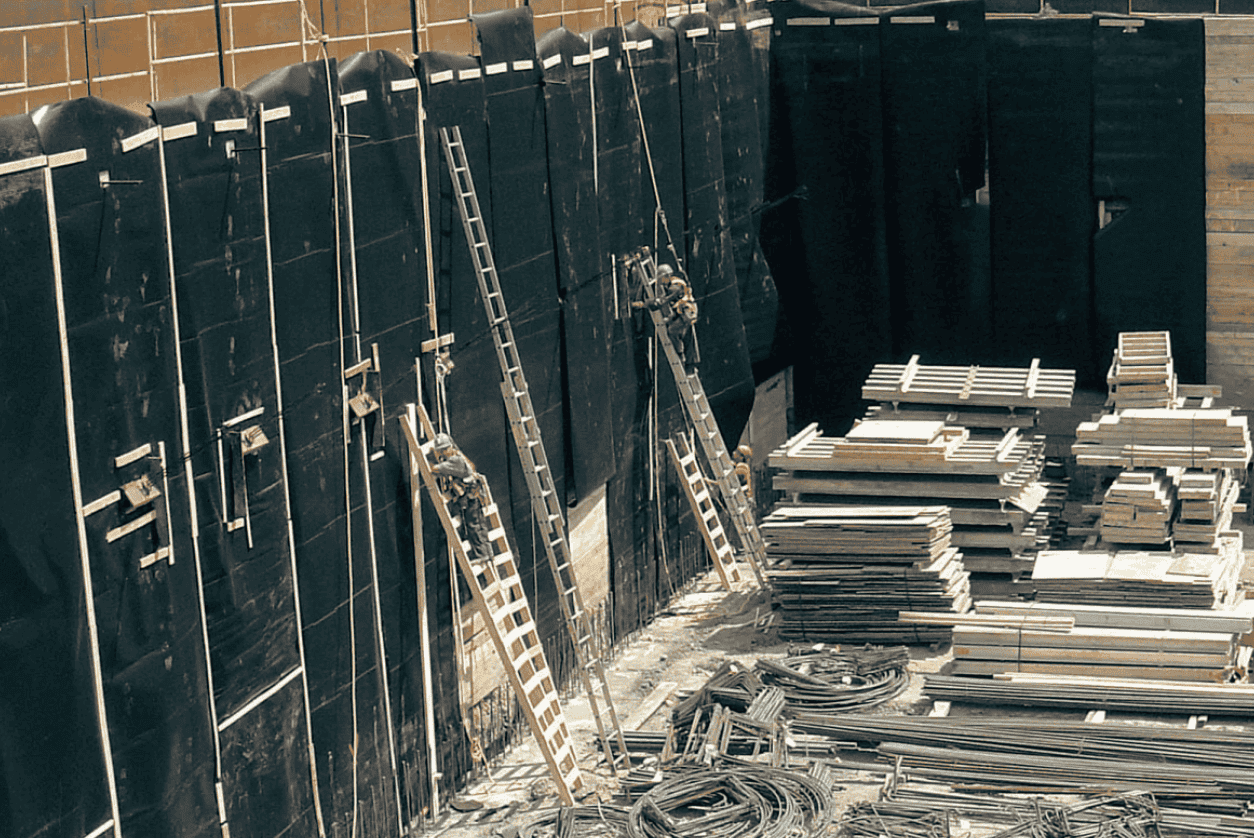
Both products are rated for the same demanding conditions: installation depths of 45 feet or more, foundation walls, underground wall construction, and hydrostatic pressure relief. The drainboard's high-strength core creates a continuous path for water to travel down and out, so hydrostatic pressure never has the chance to build against the structure. The non-woven, needle-punched geotextile facing the soil lets water through while keeping soil particles from clogging the drainage core — a detail that matters over the life of the structure, not just at installation.
Installation is straightforward for crews already familiar with drainage composites: flat side against the wall (over the membrane, for 6200 HI-X), geotextile facing the soil, run from the footing up to grade.
If You're Specced Into a Different Brand
Some project specs still reference Carlisle, Tremco, or W.R. Grace drainboard by name. If you're sourcing DELTA-DRAIN as an approved equal, here's the rough equivalency:
| DELTA-DRAIN | Carlisle CCW Miradrain | American Wick Ameridrain | Grace Hydroduct |
|---|---|---|---|
| 6000 HI-X | Miradrain 6000 | Ameridrain 500 | Hydroduct 200 |
| 6200 HI-X | Miradrain 6200 | Ameridrain 520 | Hydroduct 220 |
Always confirm equivalency against the project's actual spec section — this table is a starting point for procurement, not a substitute for engineer sign-off.
Get the Right Drainboard for Your Project
Both are in stock and ship fast:
- DELTA-DRAIN 6200 HI-X (6' x 50') — for foundation walls and parking structures with waterproofing membrane
- DELTA-DRAIN 6000 HI-X (6' x 50', 300 sqft) — for bare concrete, lagging, and retaining wall applications
Frequently Asked Questions
Does 6200 HI-X cost more than 6000 HI-X?
Yes, slightly — you're paying for the added protective sheet. It's worth it any time a waterproofing membrane is present.
Can I use 6200 HI-X even if I don't strictly need the membrane protection?
Yes. It never hurts to have the extra layer; it's just not required against bare concrete or lagging walls.
Are the compressive strength ratings really identical?
Yes — both are rated above 15,000 psf, which is why both are approved for installation depths of 45 feet or more.
What roll sizes are available?
Both products ship in 4' x 50' and 6' x 50' rolls.