Posted by Spycor LLC on Nov 6th 2026
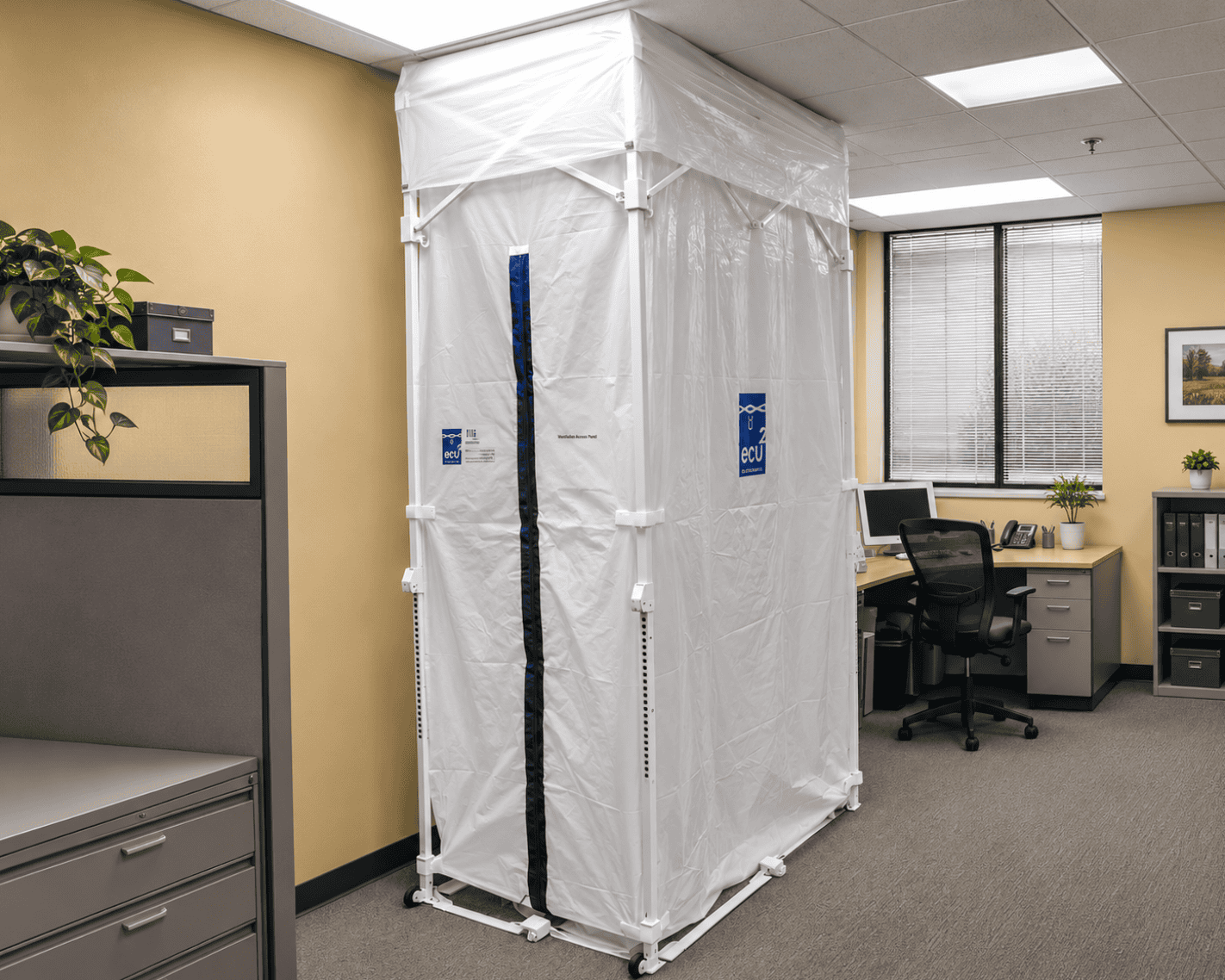
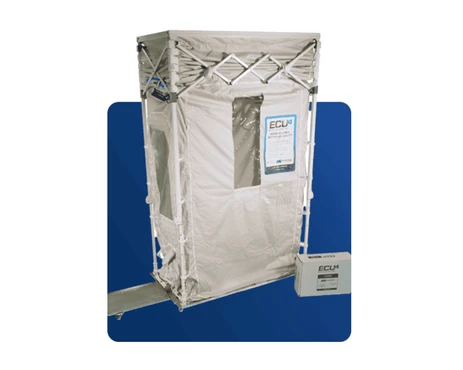
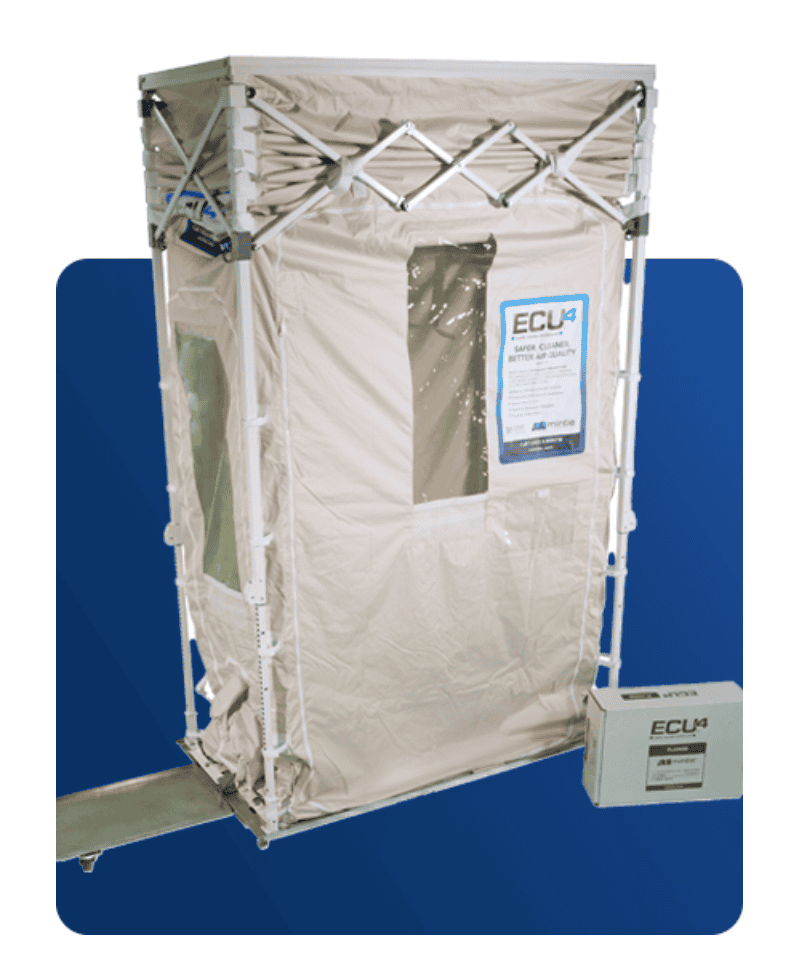
Pulling cable, installing nurse call or mounting DAS antennas above a hospital ceiling opens a dust-laden cavity near patients. The precautions required depend on the activity, the location and the facility's Infection Control Risk Assessment (ICRA). Under ASHE ICRA 2.0, above-ceiling cabling ranges from Class II in low-risk areas to Class V for invasive work in the highest-risk units. For room-to-room low-voltage work, a common approach is a mobile containment unit under negative air. The Mintie ECU4 Containment Bundle includes the ECU4 frame, a rolling platform and a negative air machine, sets up in under 10 minutes with one person, and is rented by the week from Spycor Environmental.
The manufacturer reports that the ECU4 has been clinically evaluated and tested for particle containment, ventilation and stability in healthcare environments for ICRA containment levels 1–4. That is a manufacturer claim, not independent certification, and it does not replace your facility's approved ICRA plan.
Why Above-Ceiling Cabling Work Needs ICRA Containment
The space above a hospital ceiling collects dust, mold and fungal spores. Lifting a tile in an occupied unit can release them into patient air. That is why facilities review routine above-ceiling work through the ASHE ICRA 2.0 process. Health Facilities Management notes that hospital low-voltage cabling covers network, nurse call, security, building automation, telemetry and infant-abduction systems.
Three things make low-voltage work a containment problem:
- It moves. Cable pulls and antenna drops happen at dozens of ceiling openings, room after room, rather than in one walled-off zone.
- It happens in occupied areas. Nurse call work, in particular, happens inside working patient rooms and corridors.
- Permits are standard. Many hospitals require an above-ceiling work permit and a portable containment device for minor work in high-risk clinical areas.
Building a poly and pole barrier at every opening costs crew hours on each relocation. A mobile unit moves with the ladder.
ICRA Class for Cabling, Nurse Call and DAS Work
ASHE ICRA 2.0 sets precautions by matching the construction activity type (A–D) with the patient risk group of the area (Low to Highest). The result is a Class of Precautions from I to V. Two activity types cover most low-voltage work:
- Type B: above-ceiling work such as installation of conduit and/or cabling and access to mechanical or electrical chase spaces.
- Type C: non-existing cable pathways or invasive electrical work above ceilings.
ASHE ICRA 2.0 Class of Precautions for Type B and Type C work
Patient risk group |
Type B: cabling in existing pathways |
Type C: new pathways or invasive above-ceiling work |
|---|---|---|
|
Low |
Class II |
Class II |
|
Medium |
Class II |
Class III |
|
High |
Class III |
Class IV |
|
Highest |
Class IV |
Class V |
Source: ASHE ICRA 2.0 Matrix of Precautions, Table 3. ASHE requires an infection control permit for Class III Type C work and for all Class IV and V work. Your facility's assessment controls the final class.
How the matrix applies to each job:
Job |
Usual activity type |
Containment setup to discuss with infection prevention |
|---|---|---|
|
Structured cabling moves, adds and changes in existing tray or J-hooks |
Type B |
ECU4 under negative air at each opening; HEPA vacuum cleanup |
|
New cable pathways, sleeves or core drilling above the ceiling |
Type C |
ECU4 under negative air; add an anteroom where the class requires it |
|
Nurse call upgrades in occupied patient rooms |
Type B, or Type C if new pathways are needed |
ECU4 inside the room; the unit's patient risk group drives the class |
|
DAS antennas and new cable runs |
Type B in existing pathways; Type C for new runs |
ECU4 at each antenna location; the extended frame reaches 10'6" |
|
Any work in highest-risk units (oncology, transplant, ICU) |
Type B or C |
Class IV or V. Confirm whether an ECU4 with the AnteRoom / Isolation Kit is approved, or whether hard critical barriers are required |
The ECU4 can support facility-approved ICRA procedures; it does not by itself make a job compliant. Verify negative pressure with a room pressure monitor where the ICRA plan calls for it, and clean up with a HEPA vacuum before the tile goes back.
Mintie ECU4 Specs for Cabling Contractors
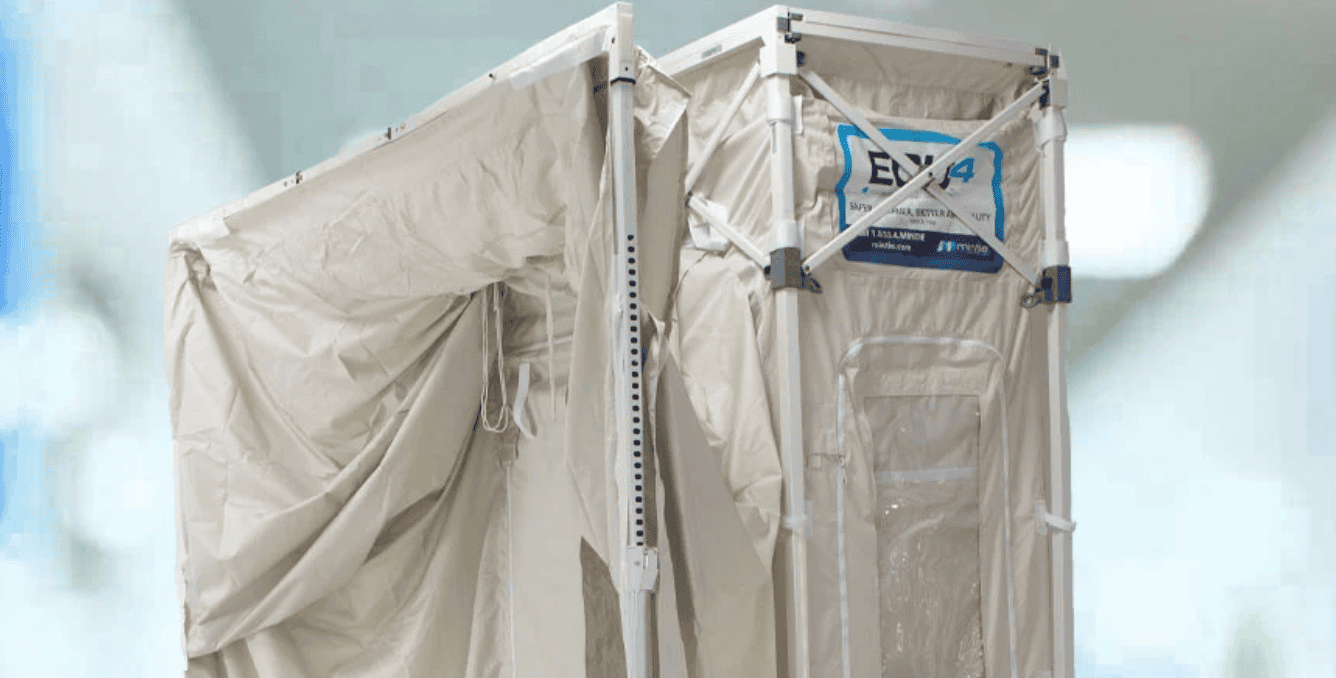
The rental bundle includes the rolling platform, the ECU4 frame and a negative air machine. A ceiling access envelope and a 99.999% HEPA filter are selectable options. Specs below are from the manufacturer's ECU4 product page and brochure.
Specification |
Mintie ECU4 |
|---|---|
|
Extended footprint |
31.31" × 61.0" |
|
Working height |
7.0' to 10.6' (mobile platform extends reach to 11 ft.) |
|
Collapsed size |
12.0" × 12.0" × 66.0" |
|
Frame weight |
44.7 lbs. |
|
Setup |
Under 10 minutes, one person |
|
Doors |
Four: two 48" wide cargo doors, two 22" narrow doors |
|
Windows |
Four clear windows, 14" × 40" |
|
Ports |
Two negative air ports (removable panel); 12.5" round port; 3.5" HEPA vacuum port |
|
Fabric |
Tan rip-stop poly, flame-rated to ASTM E84; double-reinforced nylon floor |
|
Permit display |
Clear pouch for the work or infection control permit |
|
Mobile platform |
Aluminum, 31.874" × 66.774", 58 lbs., four non-marring casters with brakes |
|
ICRA rating (manufacturer) |
Tested for containment levels 1–4 |
Why these specs matter on a cabling job:
- The narrow side of the footprint is about 31.31", and the mobile platform is 31.874" wide. Verify the actual clear door opening and platform clearance on site before planning to roll the unit between rooms.
- The 10.6' working height covers most drop ceilings and many corridor DAS locations.
- Windows let staff see into the unit when repositioning it in a busy corridor.
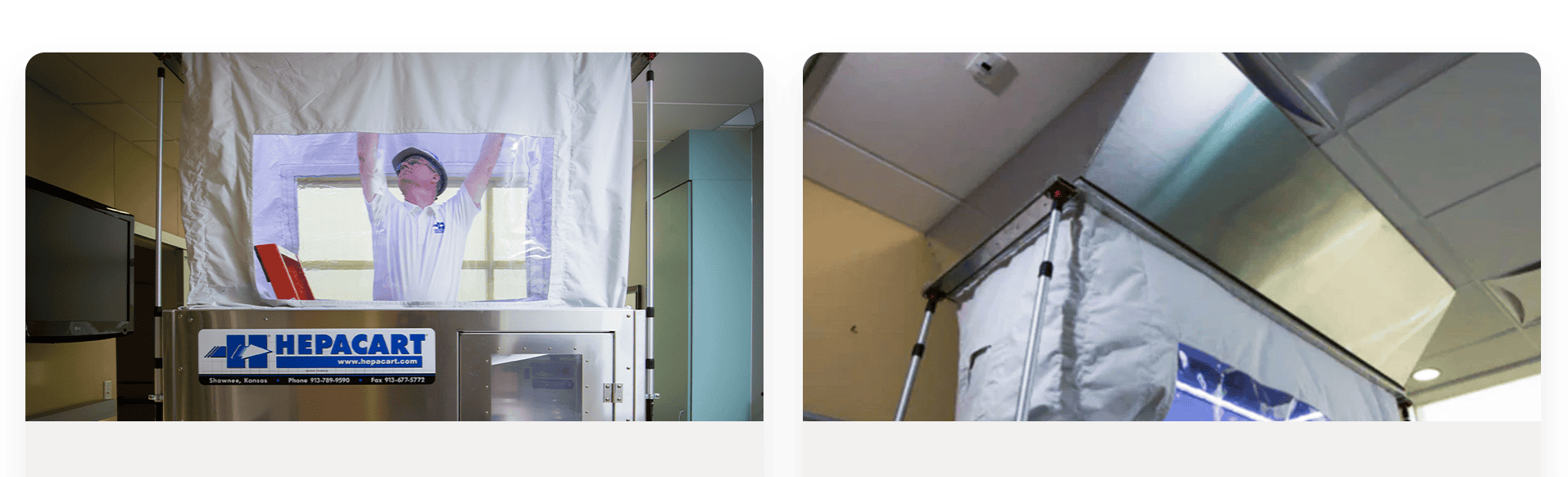
- Two ECU4 units can be combined so two technicians on ladders work side by side in one containment space.
The ceiling access envelope and the 99.999% HEPA filter are optional add-ons, selected separately on the rental page. For more reach along a wall, add the Sidewall Access Flange.
Planning hospital cabling, nurse call or DAS installations? Rent the Mintie ECU4 Containment Bundle for mobile dust containment during your healthcare project. Review the included equipment, optional accessories and rental terms before you schedule the work.
View Mintie ECU4 Rental Options →
How to Run a Room-to-Room Cabling Job with the ECU4
- Get the permit. Confirm the ICRA class and approved precautions for each area with infection prevention, and display the permit in the ECU4's clear pouch.
- Position the unit under the ceiling opening, with the ladder inside, and lock the platform casters.
- Seal to the ceiling. Extend the frame to ceiling height (7.0' to 10.6') so the envelope meets the grid before any tile moves.
- Start negative air and verify it. Connect the negative air machine to a negative air port. Confirm and monitor negative pressure the way the approved ICRA plan specifies, not just by watching the envelope draw in.
- Do the work. Pull cable, terminate devices or mount the antenna inside the unit.
- Clean before you move. HEPA-vacuum the opening and the interior through the 3.5" vacuum port, then replace the tile.
- Move and re-verify. Roll to the next opening, then repeat steps 3 and 4: re-check the ceiling seal and negative pressure at every new location before lifting a tile.
For jobs that need a fresh enclosure each time, Mintie offers single-use disposable envelopes.
Rent or Buy? Which ECU4 Setup Fits Your Team
Spycor rents the ECU4 bundle in 1- to 8-week terms, so you can match the rental to the project schedule.
Buyer / project |
Recommended setup |
Why |
|---|---|---|
|
Low-voltage, nurse call and DAS subcontractors on a fixed-length hospital job |
ECU4 Containment Bundle rental, sized to the job's weeks |
Frame, platform and negative air arrive together; no equipment to store after the job |
|
Healthcare construction and ICRA containment contractors |
ECU4 bundle rental, plus the AnteRoom / Isolation Kit for Class IV areas |
Supports Class III setups and scales to an anteroom when the approved ICRA plan requires it |
|
Hospital facility maintenance teams with constant above-ceiling work |
Start with a rental to prove the workflow, then talk to Spycor about owning units |
Ongoing moves, adds and changes make owned equipment practical; replacement envelopes and rolling platforms are sold separately |
|
Teams covering two ladders or long corridor runs |
Two ECU4 rentals combined, or the Sidewall Access Flange |
Modular units join into one larger containment space |
Bottom line: for hospital cabling, nurse call and DAS work, the Mintie ECU4 Containment Bundle rental puts mobile containment and negative air in one unit that rolls from opening to opening, in support of your facility's approved ICRA procedures. Planning a multi-floor install or several crews?
Contact Spycor Environmental at 1-877-293-0784 to request availability for your start date, confirm delivery and return arrangements, or ask about multi-unit rentals.
Frequently Asked Questions
Does pulling cable above a hospital ceiling require ICRA containment?
It depends on the activity, the area and the facility's ICRA. Under ASHE ICRA 2.0, above-ceiling cabling is Type B work, which ranges from Class II in low- and medium-risk areas to Class IV in the highest-risk units. Your facility's infection prevention team sets the required precautions.
What ICRA class is nurse call installation?
It depends on the patient risk group of the unit and whether new pathways are needed. Nurse call upgrades in existing pathways are usually Type B (Class II to IV). Work that needs new cable pathways is Type C (Class II to V). Confirm the class on the permit for each room.
What is the difference between Type B and Type C cabling work?
In ASHE ICRA 2.0, Type B covers above-ceiling installation of conduit and/or cabling, such as pulls through existing pathways. Type C covers non-existing cable pathways or invasive electrical work above ceilings. Type C moves up one class in the medium, high and highest risk groups.
What is included in the Mintie ECU4 rental bundle?
The rolling platform, the ECU4 frame and a negative air machine are included. The ceiling access envelope and a 99.999% HEPA filter are optional add-ons selected separately on the rental page.
How tall a ceiling can the ECU4 reach?
The frame extends from 7.0' to 10.6'. The mobile platform extends the reach to 11 ft., per the manufacturer's brochure.
Will the ECU4 fit through a patient room door?
Its narrow dimension is about 31.31", and the mobile platform is 31.874" wide, so it is designed to pass through standard patient room doors. Verify the actual clear door opening and platform clearance on site before planning the route.
Can one ECU4 cover two technicians?
Combine two or more ECU4 units into one larger containment space so two people on ladders can work side by side.