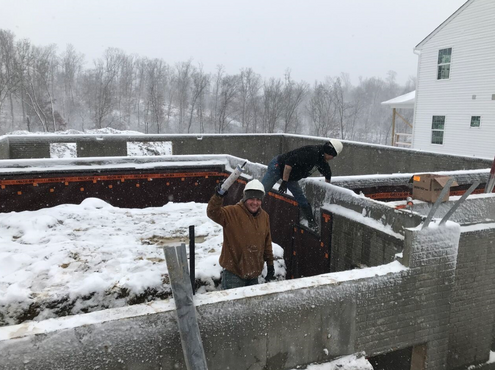
Posted by Spycor Building on Sep 11th 2025
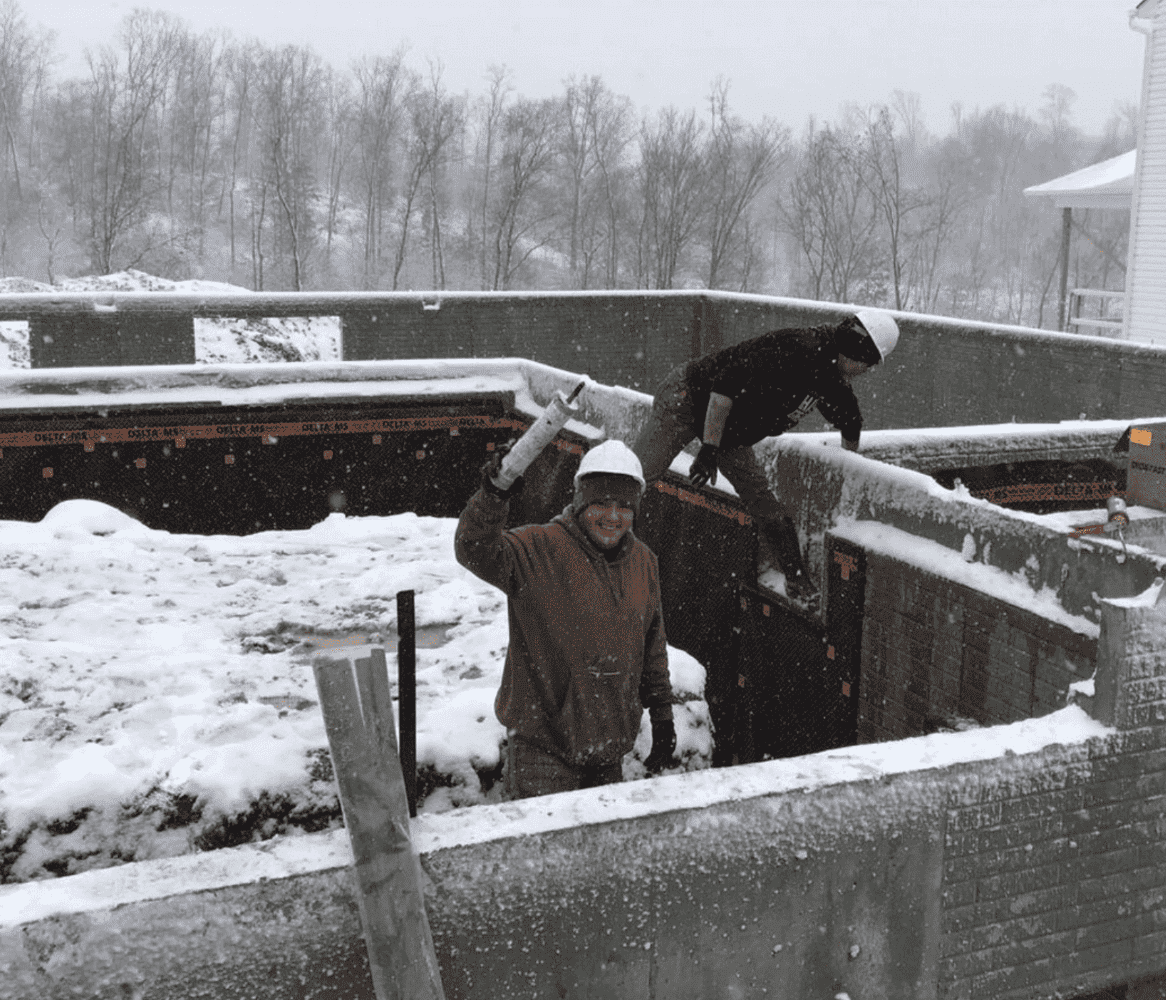
For new or excavated foundations in cold climates, the best basement wall waterproofing is an exterior HDPE dimpled membrane such as DELTA®-MS, paired with a code-compliant footing drain. Under ICC-ES ESR-2303 it can be installed at temperatures down to -24°F, it needs no cure time, and it keeps bridging cracks if the wall shifts. Its 8 mm air gap drains water to the footing. On sites with high water tables, use it as the drainage and protection layer over the designer's specified waterproofing.
This guide is written for residential homebuilders, foundation contractors, waterproofing subcontractors, ICF installers and spec writers working in cold regions (roughly IECC climate zones 5 to 8, covering the northern U.S. and Canada). It compares the main exterior basement wall waterproofing methods on the factors that decide cold-weather work: whether you can install below freezing, how long you wait before backfill, and how each method holds up as a foundation moves and cracks. All DELTA®-MS figures come from Dörken's published technical data, installation instructions and ICC-ES evaluation report, which are linked under Sources.
Why Cold Climates Are Hard On Basement Walls
Cold-climate foundations deal with several problems that milder regions don't face:
- Spring snowmelt saturates the backfill. Weeks of meltwater keep soil against the wall wet, so the wall needs both a moisture barrier and a clear drainage path to the footing drain.
- Freeze-thaw cycles open and widen cracks. Any waterproofing bonded directly to the concrete moves with the wall. If the wall cracks, a brittle coating cracks along with it.
- Short, cold construction windows. Many spray and fluid-applied products have minimum application temperatures, need a dry substrate and must cure before backfill. Cold snaps and frost on the wall can halt a job for days.
- Frozen or wet substrates. Adhered products depend on a clean, dry, frost-free surface to bond. Late-season pours and overnight frost make that hard to guarantee.
The best cold-climate solution is therefore one that installs in low temperatures, doesn't depend on cure time or adhesion, tolerates wall movement and includes its own drainage path.
Basement Wall Waterproofing Methods Compared For Cold Climates
The table compares the common exterior and interior approaches. Performance of generic categories varies by product, so always confirm temperature limits and code status on the manufacturer's data sheet.
| Method | Install below freezing? | Wait before backfill | Handles future wall cracks | Built-in drainage | Best fit in cold climates |
|---|---|---|---|---|---|
| HDPE dimpled membrane (DELTA®-MS) | Yes. DELTA®-MS may be installed down to -24°F (ESR-2303) | None. Mechanically fastened, no cure | Yes. Loose-laid sheet bridges cracks and keeps working if the wall shifts | Yes. 8 mm air gap drains to the footing | New residential foundations, ICF, winter and shoulder-season schedules |
| Spray-applied asphaltic dampproofing | Typically limited by product temperature minimums and a dry, frost-free wall | Must set or cure | No. Coating cracks when the concrete cracks | No | Minimum-code dampproofing in mild weather |
| Fluid-applied waterproofing (rubberized or polymer-modified) | Typically limited by temperature minimums, surface moisture and cure rate | Must cure; needs a protection or drainage layer | Elastomeric products bridge small cracks | No. Add a drainage board | Designed waterproofing where hydrostatic pressure is expected |
| Self-adhered sheet membrane | Typically needs primer and minimum temperatures; low-temperature grades exist | Protection board needed before backfill | Good, if seams stay bonded | No. Add a drainage board | Commercial or designed systems under the IBC |
| Bentonite panels or sheets | Check limits; must not be installed in standing water or ice | Needs prompt, compacted confinement | Self-sealing when hydrated and confined | No | High water tables, per the designer's specification |
| Interior drainage and sump | Yes (inside work) | N/A | Manages water after it passes the wall | Interior only | Existing basements where excavation isn't practical |
Bottom line: for new construction and exterior re-excavation, an HDPE dimpled membrane is the only method in the table that combines cold-weather installation, no cure time, crack bridging and a built-in drainage plane in a single product. Where the foundation designer calls for full hydrostatic waterproofing, the dimpled membrane goes over that system as its drainage and protection layer.
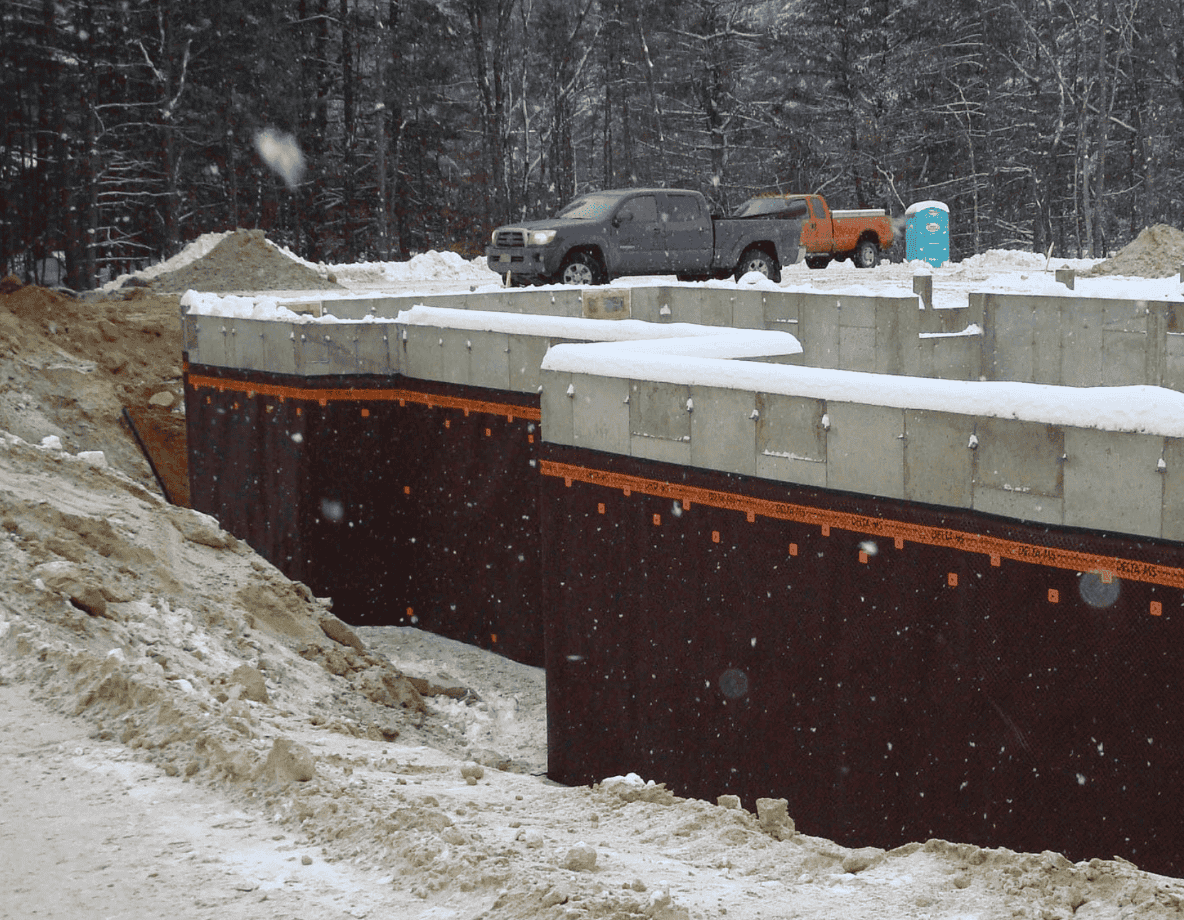
Why DELTA-MS Is The Cold-Climate Benchmark
DELTA®-MS is Dörken's dimpled foundation membrane. It is installed dimples-to-the-wall, which forms a continuous air gap. The impermeable sheet keeps wet soil off the concrete as a capillary break, and any incidental water in the gap drains by gravity to the footing drain. The following properties make it especially well suited to cold climates:
- Rated for cold installation. ESR-2303 permits installation down to -24°F (-31°C), and Dörken lists a material temperature range of -22°F to +176°F (ASTM D5261).
- No cure, no primer, no fumes. Crews fasten it as soon as the forms are stripped. Only concrete block walls need parging first. Nothing has to dry, set or off-gas before backfill.
- Bridges cracks through movement. Because the sheet isn't bonded to the wall, it keeps protecting the foundation if the wall shifts or cracks. Dörken notes this is where asphaltic sprays fail.
- Built to survive backfill. The co-extruded HDPE sheet (a 60% recycled core encapsulated in virgin HDPE) has a compressive strength of about 5,200 psf and resists damage from rocks and debris.
- Long service life. Dörken rates its service life at over 25 years (at soil pH 4 to 9 and temperatures below 77°F), with excellent chemical and root resistance.
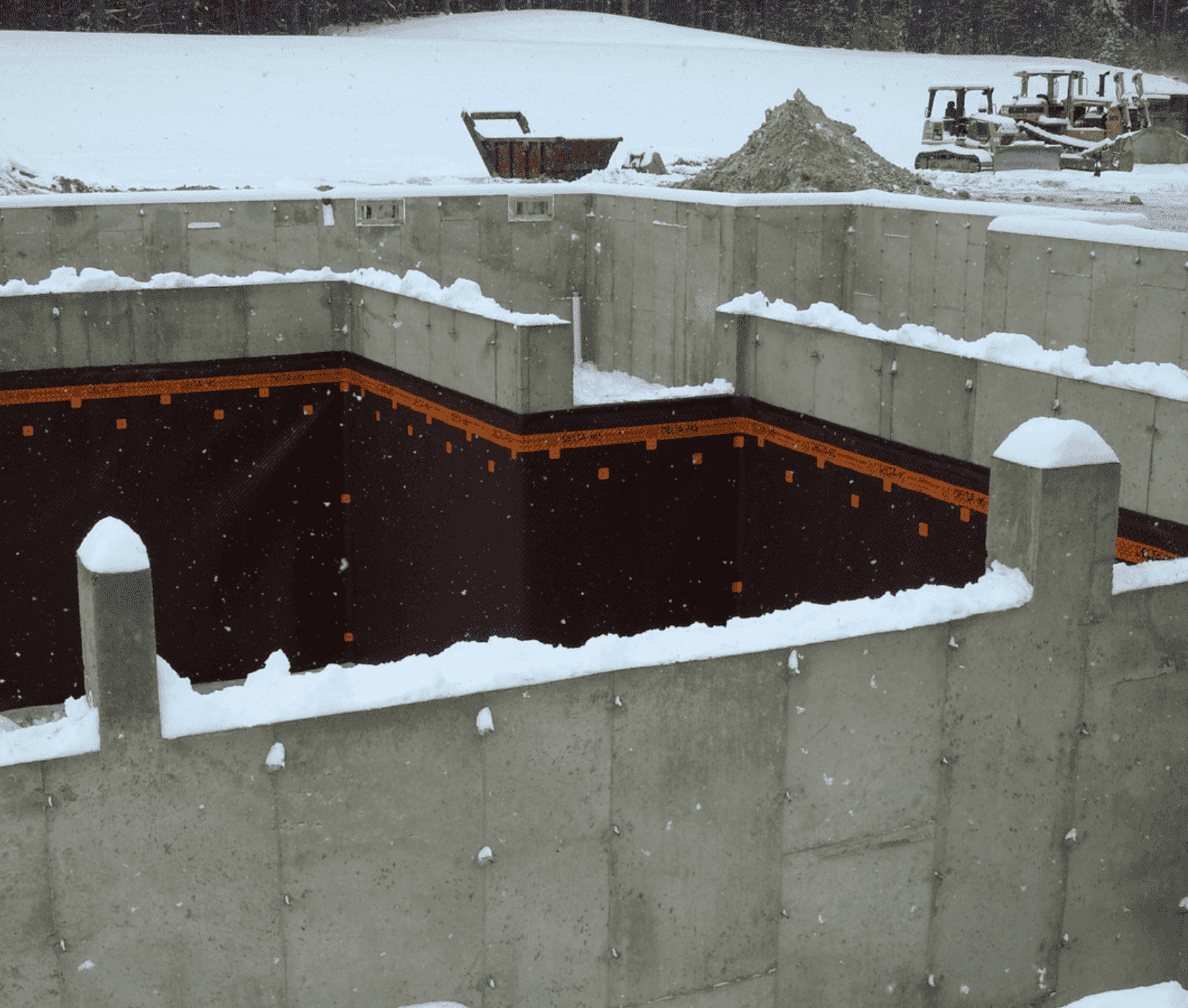
In cold regions, snowmelt can raise groundwater for weeks. Where the site has sustained hydrostatic pressure, follow the foundation designer's waterproofing specification and use DELTA®-MS as the protection and drainage layer over that membrane. Dörken's technical data lists this as an approved use.
What To Order For a Cold-Climate Foundation
Choose a roll width that covers footing to finished grade in one course, plus the drape over the footing if you use it. Every roll is 65.6 ft long. Taller walls take shingled courses with 6 in laps.
| Product | Size / contents | Coverage / use |
|---|---|---|
| DELTA®-MS 5 ft roll | 5 ft × 65.6 ft | 328 sq ft |
| DELTA®-MS 6 ft 7 in roll | 6 ft 7 in × 65.6 ft | 433 sq ft |
| DELTA®-MS 7 ft roll | 7 ft × 65.6 ft | 459.2 sq ft |
| DELTA®-MS 8 ft roll | 8 ft × 65.6 ft | 524.8 sq ft |
| DELTA®-MS 9 ft 10 in roll | 9 ft 10 in × 65.6 ft | 645 sq ft |
| DELTA®-MS Installation Kit | 75 DELTA®-FAST'ners + 75 ft DELTA®-FLASH | One kit per roll |
| DELTA®-MOLD STRIP | Termination molding | Window wells, walkouts, grade changes |
| DELTA®-SEALANT | Elastic sealing compound | Laps, corners, gaps over ⅛ in, penetrations |
Order minimums apply to some widths; see each listing for current pricing and availability. Shop DELTA®-MS rolls and accessories in Below-Grade Moisture Barriers, or call Spycor Building Products at (843) 517-8180 for project quantities and spec support.
Common Cold-Climate Mistakes to Avoid
- Installing over ice or frost. Clear the wall and footing first; frozen debris at the footing can block the drainage path.
- Skipping or loosely fastening the top termination. Soil in the air gap defeats the drainage plane.
- Leaving the membrane exposed through a long freeze. The limit is 30 days of UV exposure before backfill, whatever the weather.
- Backfilling with frozen clods or snow. As these thaw, the backfill settles and can load or damage the membrane.
- Treating a sump as a substitute for the footing drain. The code-required perimeter drain is part of the system.
- Using DELTA®-MS as standalone waterproofing where it isn't approved. On IBC projects or high-hydrostatic sites, pair it with the specified waterproofing.
Frequently asked questions
What is the best basement wall waterproofing for cold climates?
For new or excavated foundations, an exterior HDPE dimpled membrane such as DELTA®-MS, combined with a code-compliant footing drain, is the best fit. It installs in freezing weather, needs no cure time, bridges wall cracks and drains water to the footing through its air gap.
Can you waterproof a foundation in winter?
Yes, with a mechanically fastened product. Under ICC-ES ESR-2303, DELTA®-MS can be installed at temperatures down to -24°F, as long as the wall and footing are clear of snow, ice and debris. Spray and fluid-applied products are typically limited by minimum application temperatures and cure times.
What is the minimum installation temperature for DELTA®-MS?
-24°F (-31°C), per ESR-2303. Rolls should be stored out of direct sunlight at temperatures between -24°F and 122°F.
Is DELTA®-MS waterproofing or dampproofing?
Both, depending on the code. Under the IRC it is recognized as foundation dampproofing and as wall waterproofing in low hydrostatic pressure conditions. Under the IBC it is recognized as dampproofing, and use as waterproofing is outside the scope of ESR-2303.
Does DELTA®-MS work on ICF foundations?
Yes. ESR-2303 covers ICF walls. Fasten with screws into the flanges of the ICF cross-ties, and use a sealant approved by the ICF manufacturer.
Do I still need a footing drain with DELTA®-MS?
Yes. DELTA®-MS directs water down to the perimeter footing drain, which must be installed to IRC R405 or IBC 1805.4.
How long can DELTA®-MS stay exposed before backfill?
Backfill within 30 days of installation to protect the membrane from prolonged UV exposure.
Can DELTA®-MS be installed over other waterproofing?
Yes. Dörken lists DELTA®-MS as a protection layer over spray- or sheet-applied waterproofing systems. It shields the membrane from backfill damage and adds a drainage path.
What roll size of DELTA®-MS should I order?
Pick a width that covers footing to finished grade in one course. Spycor stocks 5 ft, 6 ft 7 in, 7 ft, 8 ft and 9 ft 10 in widths, all 65.6 ft long. Plan on one DELTA®-MS Installation Kit per roll.
Can DELTA®-MS fix an existing wet basement?
Only if the exterior of the wall is excavated, because the membrane is installed on the outside face of the foundation. For basements that can't be excavated, interior drainage systems are the usual alternative.