Posted by Spycor Building on May 20th 2023
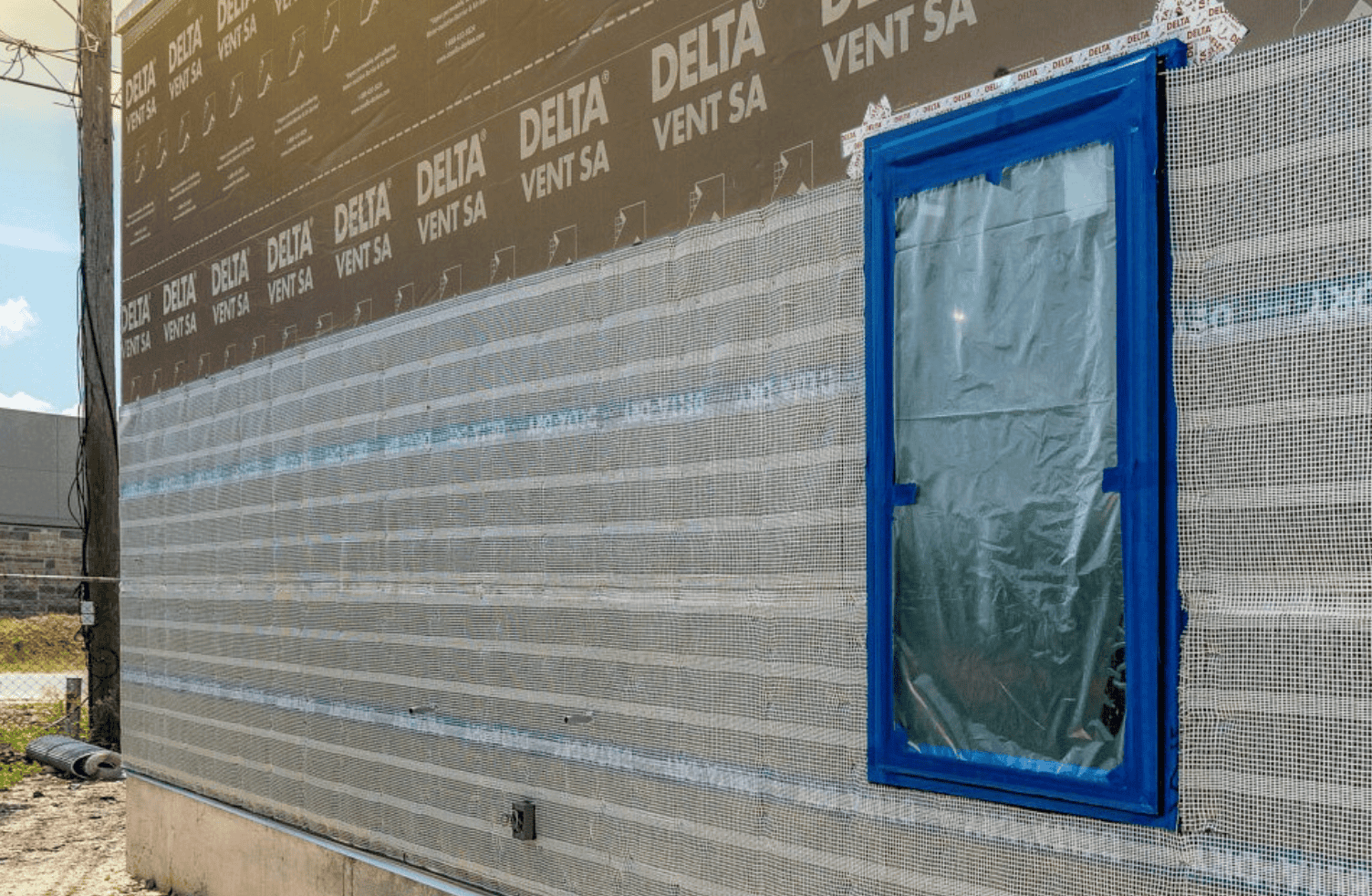
Moisture trapped behind exterior cladding is the single greatest threat to a building’s structural integrity and a builder’s professional reputation. Whether it is wind-driven rain penetrating the facade or solar-driven vapor pushing inward, traditional housewraps often fail to provide the ventilation necessary for complete drying.
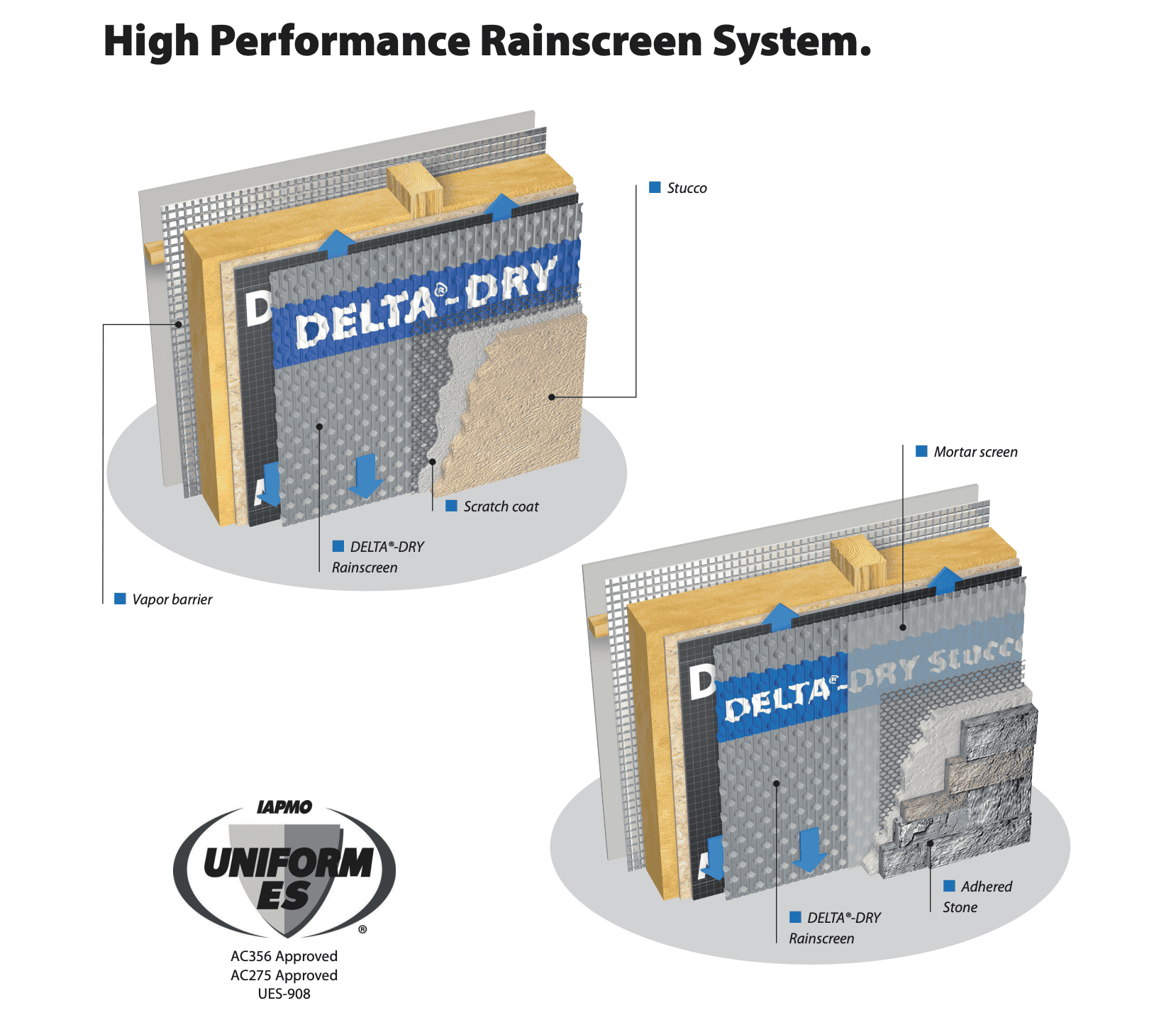
For high-performance builds, the DELTA®-DRY Ventilated Rainscreen System has become the industry standard. It doesn’t just barrier moisture—it manages it through a dual-chambered system that ensures the wall assembly remains dry, year after year.
The Problem: Why Standard WRBs Fail in Modern Construction
Most standard Water-Resistive Barriers (WRB) are designed to shed bulk water, but they lack a capillary break. When cladding like stucco, stone veneer, or fiber cement sits directly against the barrier, moisture becomes trapped. This leads to:
-
Rot and Mold: Undetected moisture creates a breeding ground for organic growth within the sheathing.
-
Efflorescence: On masonry and stucco, trapped water pulls salts to the surface, ruining the aesthetic finish.
-
Surfactant Issues: Cedar oils or soap residues can degrade the water-shedding capabilities of standard wraps over time.
DELTA®-DRY vs. Furring Strips: Which is Better?
Many contractors traditionally use wood furring strips to create a rainscreen gap. However, DELTA®-DRY offers several distinct advantages for the modern jobsite:
-
Consistency: Furring strips can vary in thickness or be installed unevenly. DELTA®-DRY provides a guaranteed, continuous 10.5mm air gap across the entire wall surface.
-
Labor Savings: Installing individual wood strips is time-consuming. DELTA®-DRY rolls out quickly, significantly reducing man-hours.
-
Drainage Path: Furring strips can inadvertently create "water dams" if not perfectly aligned. The dimpled HDPE structure of DELTA®-DRY ensures an unobstructed drainage path for bulk water.
-
Material Integrity: Wood furring strips can rot if moisture is trapped behind them. DELTA®-DRY is chemically inert and completely waterproof.
Best Applications for DELTA®-DRY Rainscreen Systems
To maximize the lifespan of a building envelope, this ventilated rainscreen system should be used in high-exposure applications:
1. Rainscreen for Stucco and Stone Veneer
Stucco and manufactured stone are "reservoir claddings," meaning they absorb and hold water. DELTA®-DRY prevents this absorbed moisture from migrating into the wooden structure of the home.
2. Rainscreen for Fiber Cement and Wood Siding
Prevent "cupping" and paint failure by allowing the backside of the siding to breathe. This is the best way to extend the life of premium wood siding.
Common Jobsite Problems This Solves
Transitioning to a drainage mat behind siding solves the most common "callback" issues that haunt contractors:
-
Failed Inspections: Meets strict building codes for moisture management in climate zones 4 and higher.
-
Warranty Claims: Protects you from legal liability related to mold and structural rot.
-
Aesthetic Complaints: Prevents staining and "ghosting" on exterior finishes caused by trapped dampness.
Technical Edge: Dual-Chamber Ventilation
The DELTA®-DRY system is a heavy-duty, structured membrane made from high-density polyethylene (HDPE). Unlike flat wraps, its unique "dimpled" geometry creates two distinct air gaps:
-
Exterior Air Gap: Allows water that penetrates the cladding to drain away instantly.
-
Interior Air Gap: Faces the sheathing, allowing water vapor originating from inside the home to escape. This "back-venting" is critical for airtight, energy-efficient homes.
Secure Your Project Today at Spycor Building Products
Don’t risk a callback. Investing in a high-performance rainscreen system is the most cost-effective insurance policy for your building envelope.
Shop DELTA®-DRY Rainscreen at Spycor Building Products
Frequently Asked Questions (FAQ)
Can I use DELTA®-DRY under stucco?
Yes. It is specifically engineered for "reservoir" claddings like stucco and stone. It provides the necessary drainage space to prevent water from being held against the building.
Does DELTA®-DRY replace a housewrap (WRB)?
While it provides excellent moisture protection, it is typically installed outboard of a primary WRB. This creates a "redundant" moisture management system that is much safer for the homeowner.
How does this compare to a standard 10mm drainage mat?
The 10.5mm thickness and dual-chamber design of DELTA®-DRY provide significantly better airflow and faster drying times than standard single-sided drainage mats.
Is it compatible with cedar siding?
Absolutely. It provides a complete capillary break that protects the wood from moisture-related cupping and prevents cedar surfactants from damaging the wall assembly.