Posted by Spycor Building on Jun 4th 2026
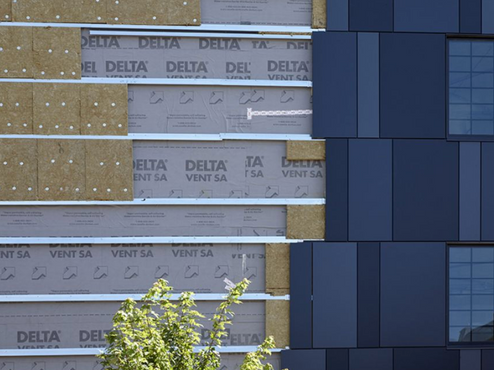
Bottom line up front: The best air and water resistive barriers for U.S. commercial and residential construction are self-adhered and vapor-permeable membranes — specifically the DELTA®-VENT SA (self-adhered, 50 perms, NFPA 285 compliant) and DELTA®-VENT S (heavy-duty mechanically attached, 120 perms) from Dörken/Cosella-Dörken, both available at Spycor Building Products. For open-joint rainscreen cladding, DELTA®-FASSADE S (328 perms, permanent UV exposure rated) is the only purpose-built option.
What Is an Air and Water Resistive Barrier — and Why Does It Matter?
An air and water resistive barrier (AWB) is the continuous membrane installed between a building's structural sheathing and its exterior cladding. It does two jobs at once:
- Blocks liquid water — wind-driven rain, ice melt, and runoff from penetrating the wall cavity and framing
- Controls air movement — prevents uncontrolled infiltration and exfiltration that drives moisture damage and energy loss
Critically, a high-performance AWB is also vapor permeable — it lets trapped moisture vapor escape outward while still stopping bulk water from getting in. This is what distinguishes a quality AWB from a vapor barrier, which traps moisture and causes the exact mold and rot problems contractors are trying to prevent.
The U.S. Department of Energy estimates commercial buildings lose roughly 6% of all energy through uncontrolled air leakage. For a 50,000-square-foot commercial building, that's a significant and entirely preventable operating cost. Proper AWB installation is one of the highest-ROI investments in any new construction or major renovation project.
Code Requirements: What the Law Requires
AWBs are not optional on commercial projects. Two separate codes mandate them, and they must work together:
IBC Section 1404.2 (Water-Resistive Barrier): The International Building Code requires an approved WRB behind all exterior veneer on commercial buildings, compliant with ASTM D226 or ASTM E2556. This applies to every commercial project in every U.S. jurisdiction.
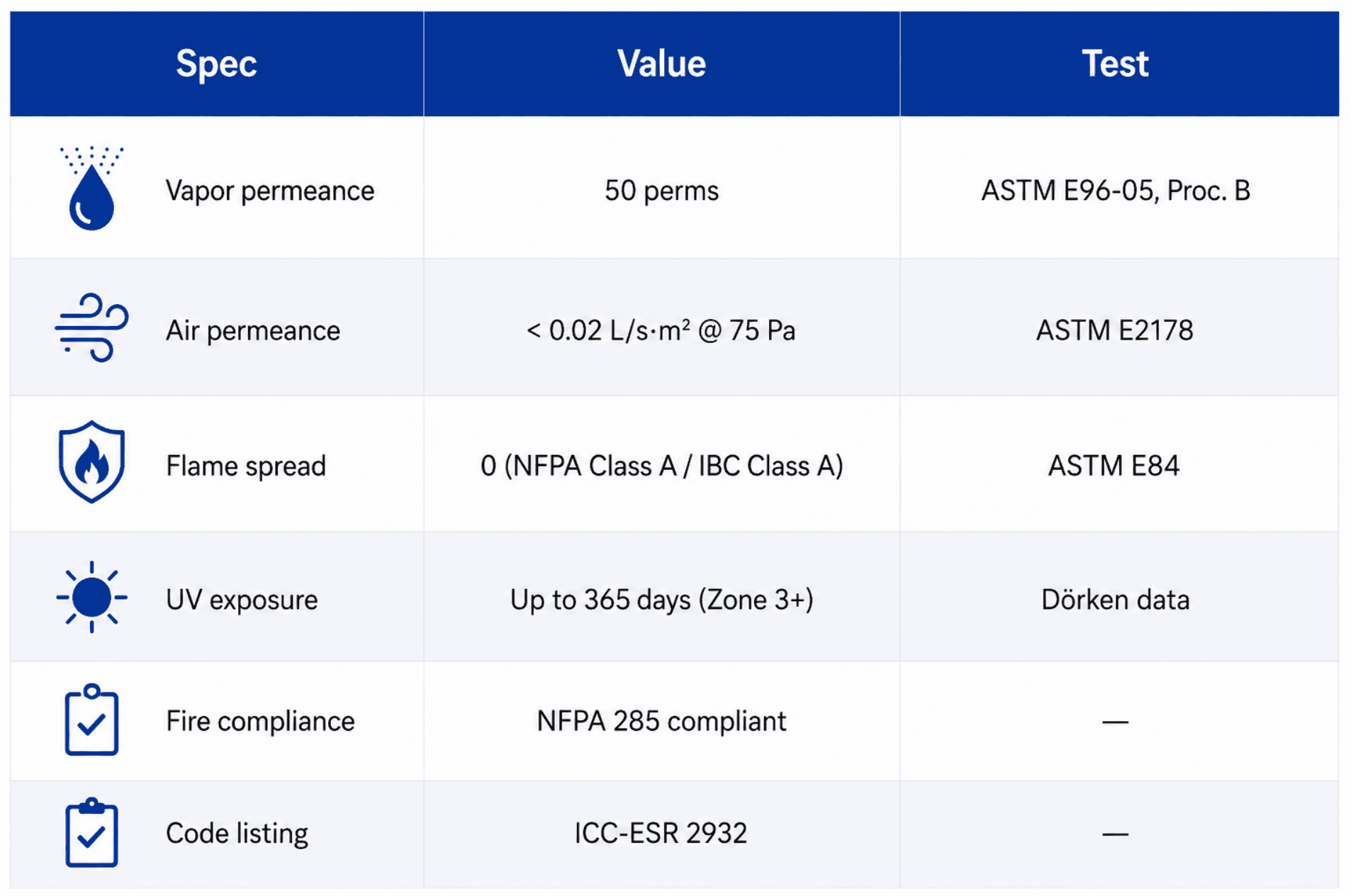
IECC Section C402.5 (Continuous Air Barrier): The International Energy Conservation Code requires a continuous air barrier throughout the commercial building thermal envelope. Material compliance threshold: ≤ 0.004 cfm/ft² at 75 Pa per ASTM E2178. The 2024 IECC added third-party blower door verification on projects using the whole-building compliance path — raising the stakes for proper installation significantly.
NFPA 285: For buildings over 40 feet tall (Types I–IV construction), any combustible AWB must be part of a wall assembly that has passed NFPA 285 fire testing. This applies to the complete assembly — AWB + insulation + cladding — not the product alone. Always confirm your specific assembly has a published NFPA 285 listing.
One product that passes both ASTM E2178 (air permeance) and ASTM E2556 (water resistance) can satisfy both the IBC and IECC requirement simultaneously — which is exactly how the DELTA® product line is designed.
AWB Types: Self-Adhered vs. Fluid-Applied vs. House Wrap
There are three main AWB categories used in U.S. construction:
Self-adhered sheet membranes bond directly to sheathing without mechanical fasteners. They eliminate the primary failure point of traditional building wrap — every staple and nail hole is a path for air and water. Self-adhered products are the commercial construction standard for good reason: factory-controlled thickness, locked seams, and no fastener penetrations.
Fluid-applied membranes are spray- or roller-applied liquids that cure into a seamless, monolithic barrier. They excel at irregular substrates (CMU, concrete block), complex geometries, and penetration detailing. Most commercial projects use fluid-applied products at transitions and penetrations, paired with self-adhered sheets on the flat wall field.
Mechanically attached building wrap (traditional house wrap) is fastened with cap nails or staples. Every fastener is a potential breach. These products are adequate for simple residential applications but fall short of commercial air barrier performance requirements without meticulous tape detailing at every seam and penetration. Standard house wrap is not a substitute for a commercial-grade AWB.
The 3 Best AWBs for Commercial and Residential Construction
All three products below are stocked and shipped nationwide by Spycor Building Products.
1. DELTA®-VENT SA — Best Overall for Commercial and High-Performance Residential
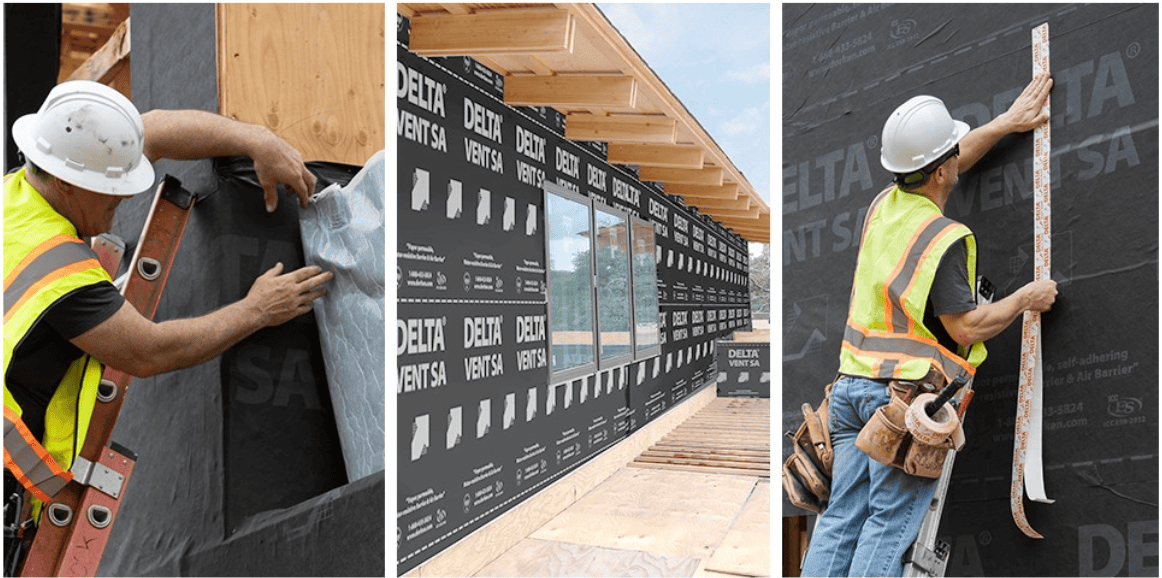
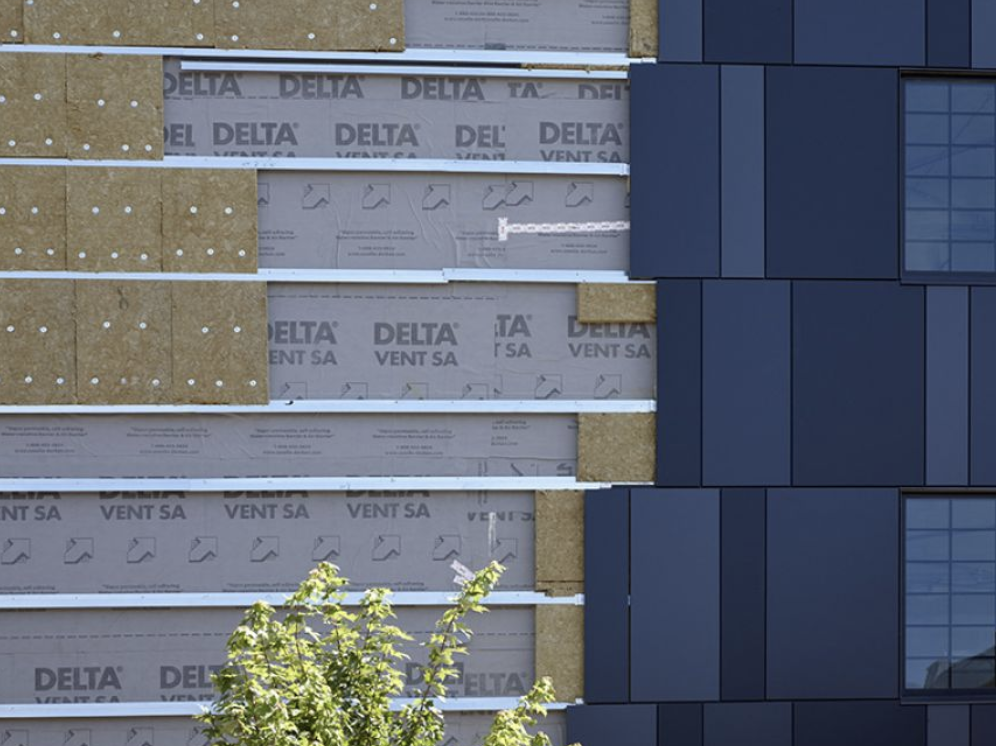
DELTA®-VENT SA by Dörken/Cosella-Dörken is the top choice for contractors who need documented air barrier performance on commercial and high-performance residential projects.
What makes it the best:
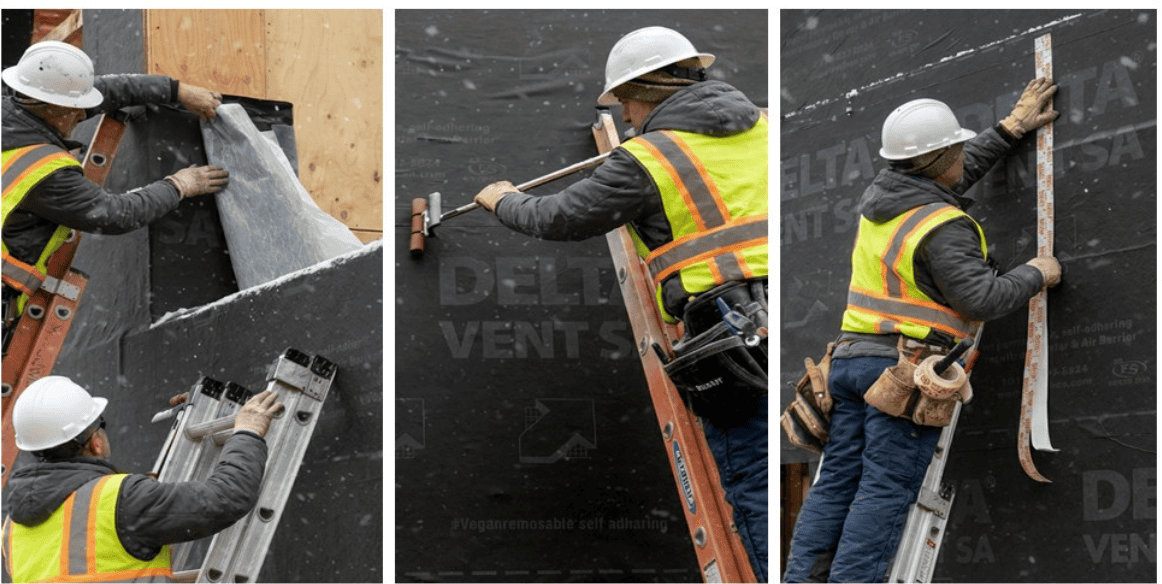
Its standout feature is the locked self-adhesive edge lap — a glue strip on the front face that bonds glue-to-glue with the overlapping course, creating a watertight horizontal seam without any field-applied tape. On a commercial building with hundreds of linear feet of horizontal laps, this eliminates the single most common failure point in sheet membrane AWB systems.
It also passes ASTM D1970 nail sealability testing — meaning fasteners driven through the membrane are self-sealed by the adhesive, eliminating leaks at mechanical attachment points.
Works on: OSB, plywood, concrete, masonry, exterior-grade drywall (with DELTA® Primer LVC where required)
Best for: Low- and mid-rise commercial (offices, retail, mixed-use), multifamily residential, healthcare facilities, LEED-certified projects, and any project requiring air barrier documentation.
2. DELTA®-VENT S — Best for Heavy-Duty Mechanically Attached Applications
DELTA®-VENT S is a 3-layer, heavy-duty spunbonded polypropylene AWB designed for commercial wall assemblies and non-vented roofs where a mechanically attached membrane is preferred.
At 120 perms vapor permeability (ASTM E96 Proc. B), it ranks among the most vapor-open AWBs available in the U.S. market. This matters most in hot-humid and mixed-humid climates (Zones 1–4), where walls must dry aggressively to the exterior to prevent mold.
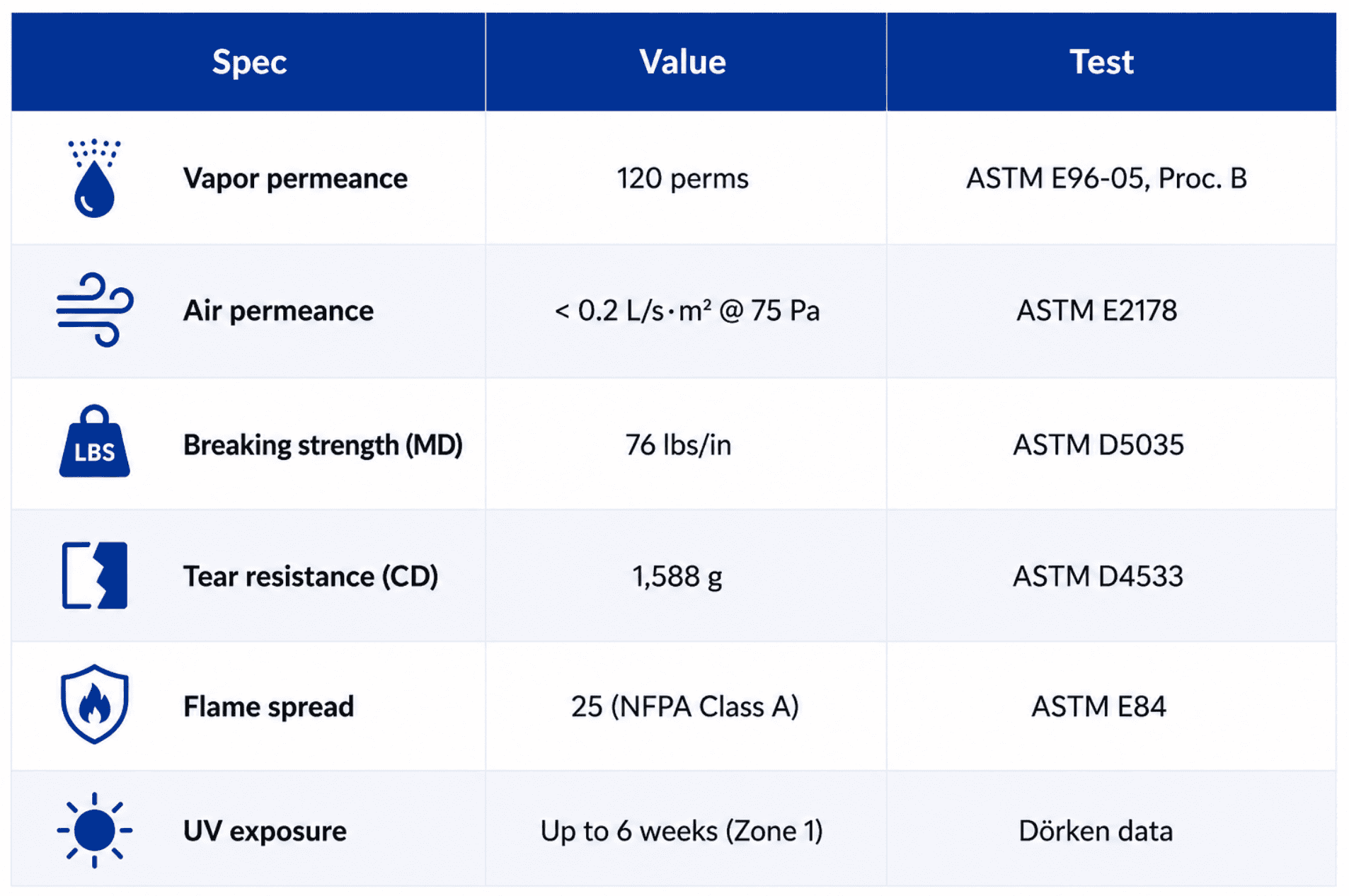
Its heavier substrate outperforms standard building wraps in jobsite durability — critical on large commercial projects where the AWB is exposed to foot traffic, wind loading, and mechanical damage for extended periods before cladding is installed. The matte gray finish eliminates glare for crews working on south- and west-facing walls.
Best for: Production commercial construction, warm and hot climates requiring maximum vapor permeability, non-vented roof assemblies (DELTA®-VENT S PLUS version), and projects where budget favors mechanically attached systems.
3. DELTA®-FASSADE S — Best for Open-Joint Rainscreen Cladding
If your project uses open-joint metal panel, fiber cement plank, terracotta, or wood rainscreen cladding, you need an AWB that can handle permanent, direct UV exposure. Standard AWBs — including DELTA®-VENT S and DELTA®-VENT SA — are not rated for this condition. DELTA®-FASSADE S is.
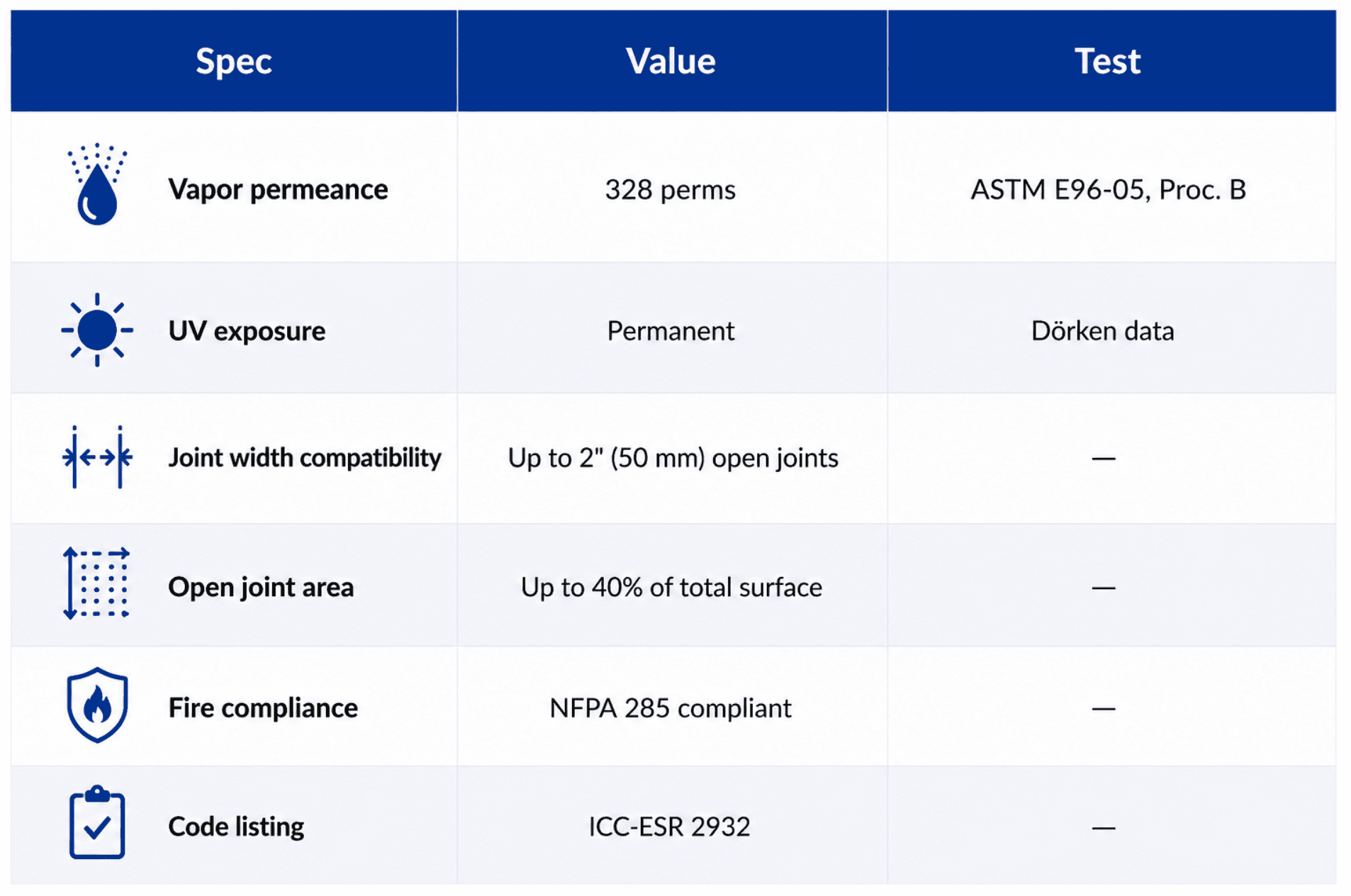
At 328 perms, DELTA®-FASSADE S has the highest vapor permeability of any Dörken AWB — which makes sense, since open-joint assemblies rely on ventilation behind the cladding for drying. Its black PET substrate with UV-stable acrylic coating is engineered for long-term exposure and remains dimensionally stable behind open joints for the life of the building.
Best for: Commercial rainscreen facades, contemporary architectural metal panel systems, wood plank and fiber cement rainscreen applications.
Top AWB Installation Mistakes to Avoid
The best AWB on the market will fail if installed incorrectly. The most common jobsite errors:
Reverse lapping — AWB courses must be installed bottom-to-top (like shingles), so upper courses overlap lower ones and water sheds outward. Installing top-to-bottom channels water directly into the wall.
Skipping penetration detailing — Every pipe, conduit, window anchor, and mechanical penetration is a potential breach. Use DELTA® liquid flashing or compatible sealant at every one.
Failing to connect to the roof air barrier — The air barrier must run continuously from foundation to roof. A gap between the wall AWB and roofing system air control layer defeats both systems and commonly shows up as a failure in blower door testing.
Exceeding UV exposure limits — DELTA®-VENT S carries a 6-week UV exposure limit in Climate Zone 1. Plan cladding installation accordingly.
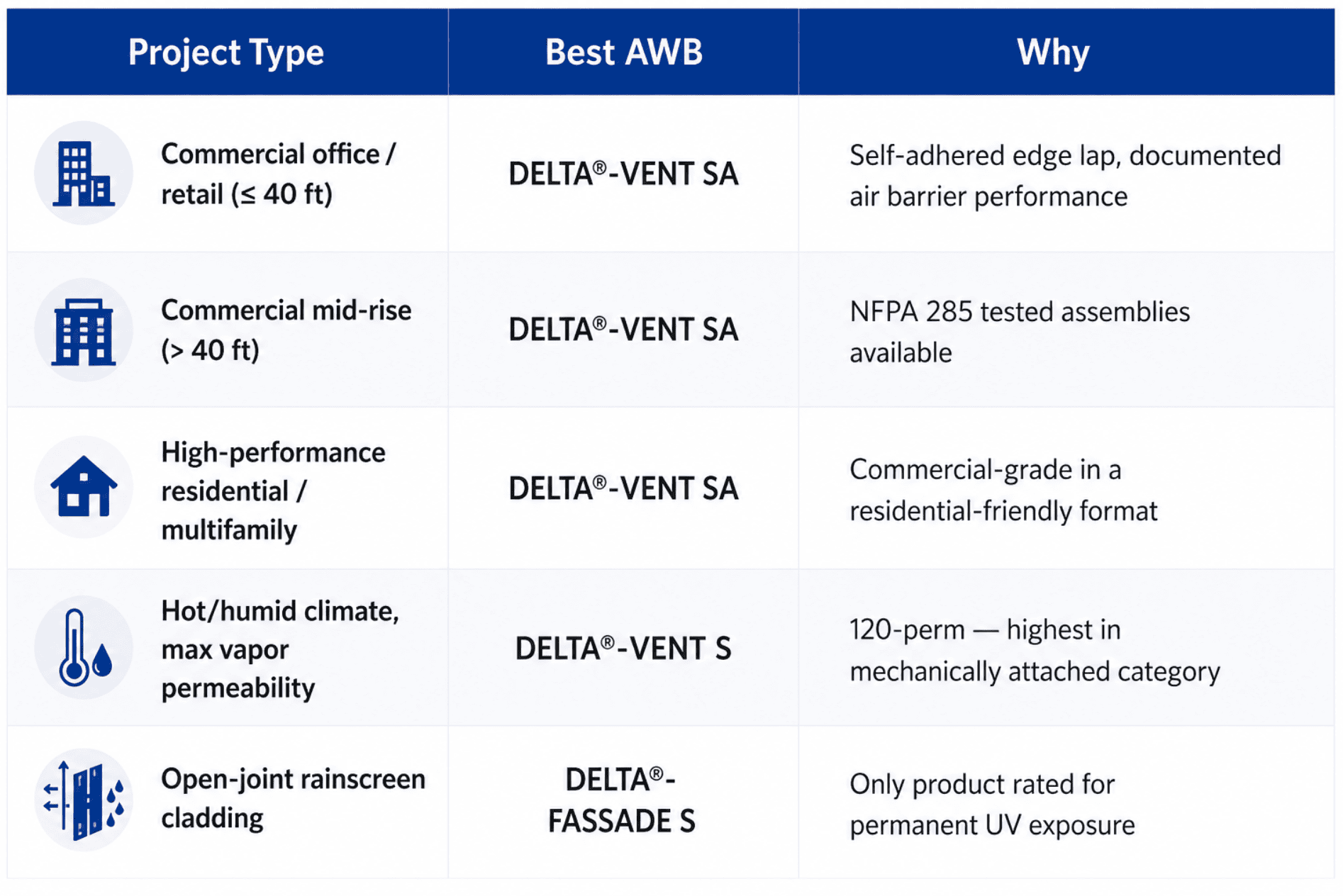
Quick-Reference: Which AWB Is Right for Your Project?
Where to Buy
Spycor Building Products is a nationwide distributor of the complete Dörken DELTA® AWB line — including DELTA®-VENT S, DELTA®-VENT SA, DELTA®-FASSADE S, and the full suite of DELTA® tapes, flashings, and accessories. We ship directly to your jobsite.
Spycor Building Products — nationwide distributor of moisture management products for commercial and residential construction. View our full AWB product line →
Frequently Asked Questions
Can I use house wrap on a commercial building?
Standard house wrap (stapled building wrap) is not adequate for most commercial air barrier applications. IBC and IECC require performance that mechanically attached wrap cannot reliably deliver at commercial scale without extensive supplemental detailing. Self-adhered or fluid-applied AWBs are the correct solution.
What's the difference between a WRB and an air barrier?
A WRB (water-resistive barrier) blocks liquid water per IBC 1404.2, tested under ASTM E2556. An air barrier controls air movement per IECC C402.5, tested under ASTM E2178. High-performance AWBs like DELTA®-VENT SA satisfy both requirements in a single product.
Do AWBs need to be vapor permeable?
In most U.S. climate zones — especially humid and mixed climates — yes. A vapor-impermeable AWB traps moisture inside wall cavities, creating ideal conditions for mold growth. DELTA®-VENT S (120 perms) and DELTA®-VENT SA (50 perms) are highly vapor permeable, allowing walls to dry to the exterior.
What is NFPA 285 compliance?
NFPA 285 is a fire test required for combustible exterior wall assemblies on commercial buildings over 40 feet (Types I–IV construction). The test applies to the full assembly, not just the AWB product. DELTA®-VENT SA and DELTA®-FASSADE S are NFPA 285 compliant in published assemblies. Confirm your specific wall assembly has a listed test result.